The Nautilus, the Golf Swing, Golden Ratio, Fibonacci seque

Well, how about this then…

A train needs to ascend to the top, but going straight up is too much work fighting gravity with such a severe upward slope. So, enter a simple machine, the slope, the gentle upward angle narrowly but always seeking inward toward the middle until it finds the ‘top’.
During ascension, the couplings are stretched while the engine is pulling the components up the gradient which is always seeking inward given a defined distance from a central axis to the edge of land.

From the top, and this is where it gets interesting, during descension no matter how far the train has traveled down from the top of the mountain it is, along that pathway, always at the highest point relative to the top, and not a shade lower.

The best part is on the way down the couplings between components get compressed while the ENGINE IS PROVIDING the braking necessary because without braking, or traveling in a lower gear, the ever increasing acceleration would become too much to handle in physic’s backyard.

She’ll be comin’ round the mountain when she comes.
[youtube]http://www.youtube.com/watch?v=wvu-TrbsHxc[/youtube]

One of these days I hope to get up to see a gig at Red Rock…retirement seems to have you thinking Mr. Rat.

Yes, I have had an interesting peek at a peak- nothing paramount mind you. :slight_smile:
pp.jpg

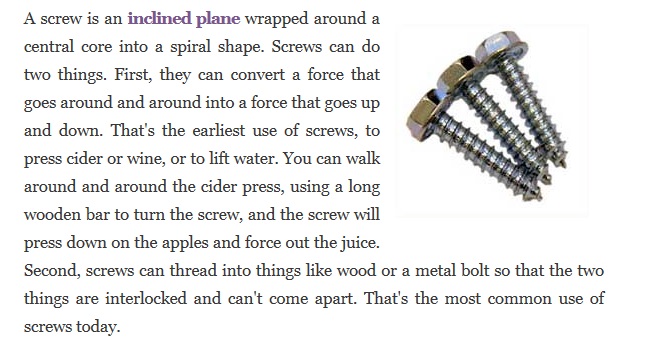
The simplest of the simple machines:
The Screw.jpg

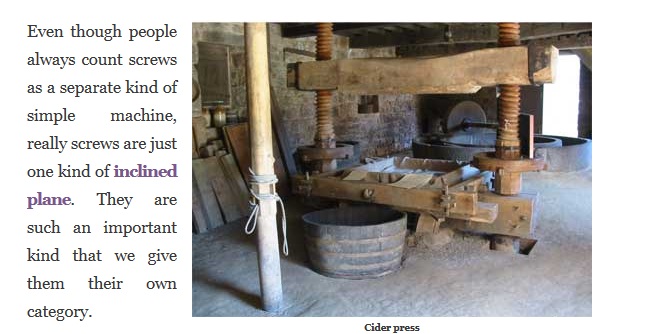
And a closer look at CP… :wink:
CP.jpg

Pondering your musings RR, but I’m having trouble digesting this …

Can you give me some mental help?
BTW, we birds like the spiral path down too.

Sure my fine feathered friend, let me cook something up, or down, on the explanation tree that only a mother would love. In the meantime, perspective is key and this gives a glimpse.
[i][b]
“The true soldier fights not because he hates what is in front of him, but because he loves what is behind him.”

― G.K. Chesterton [/b][/i]

At a given point along a travel route is a phrase ‘I am closer to where I am going’ more definable, or measurable, than a more well-known phrase ‘I am a long way from home’. Even though freeway signs give us mileage to our destination it really could, and often times might be, a variable number given any change of direction from our intended path via detour, or wrong turn.

What would not change, or be subject to future numerical variability, because it is stuck in the present, is where we are in relationship to our start point which is now behind us. So no matter how close I am getting to my destination, or the bottom of the mountain, I am always tied to a starting point figuratively, and perhaps feel closer to it literally, because the bottom is not guaranteed- there could be derailment.

I could turn around, change direction and head back to the top of the mountain and I would then be closer to the bottom, or the new start point, than I would be to the top, so no matter what direction we are always homeward oriented in some sort of way.

Ever think that Hogan met this hallmark in 1953- low hands going back from in front, to high hands going forward from in back notwithstanding two slope-arcs and a pretty compliant body that knew how to reset arc paths because you can’t come down on the same track.

And if you understand any of that Mr. Eagle pull up a chair next to me @ Alice’s fine eatery where you can get anything you want, but bring a quarter for the Wurlitzer.
[youtube]http://www.youtube.com/watch?v=U6K8wfyzAJQ[/youtube]

Can’t wait till spring to get a nice cone. Will have to convince the local proprietor to develop a new taste and color called Ben Hogan Grey.

Interesting look at vertical pressures meeting horizontal resistance within a circular action.
[youtube]http://www.youtube.com/watch?v=QwFsRV5UURI[/youtube]

RR,

Saw this and somehow thought you would like it.

Whirlwind.jpg

I don’t know about home always being closer, sometime it is a long way home…when we lose our way:

[youtube]http://www.youtube.com/watch?v=2eoJSvYLgMM[/youtube]

Saw this and somehow thought you would like it.

Let’s just hope the devil is not in the details… :laughing:

I’m SS ( still stumped) RR.

Seems to me, and at least one other, you not only like solving puzzles/riddles…but also enjoy creating them. I will continue to ponder, as I’m sure there is a kernel, a nugget, a slice of cheese ahead…

I’m not proud, so be free with the hints! and remember what this imaginative fellow once said…

Question: Is this a riddle that has the element of our view of time as a component. Like Yogi Berra’s response when asked what time it is…“it’s now.”

Not sure if Eagles and Rats should be in the same room. Hey, saw last week in a local rag that 4 American Bald Bad Ass Eagles have found new homes about 10 minutes from me. I plan to scurry over this spring and see if I can gaze upon them without getting talon whipped.

These are just some images Eagle relative to feel. The one I put on Teebox’s thread are quite similar to Lags, with just some personal variation added. For instance, I don’t see a large comparative difference between coasting down a hill in San Fransisco with the clutch engaged and a train using weight from the top of the mountain to keep the overall process slower- both are playing with the acceleration variable against the prevailing mass.

The change of direction from the top of the mountain is what interests me most. We are within these circles without straightness but there is one small, small segment that is straight compared to the fluidity and shape of the rest of the motion, and it is during transition. Since you can’t take the same piece of track down to the bottom you have to slot backward and here is the smallest piece of the puzzle- the straight piece!
sp1.jpg

Remember Hogan on the beach, from the top there is just the slightest move of the club horizontally backward along the horizon line before it starts its spiraling descent.

Hogan on the beach. At 19 seconds something goes backward onto another track… watch the club head track the horizon line between sea and sky for just a slight moment.

[youtube]http://www.youtube.com/watch?v=e_tkZegUozY[/youtube]

Since we can’t, or shouldn’t, throw the outside arms….

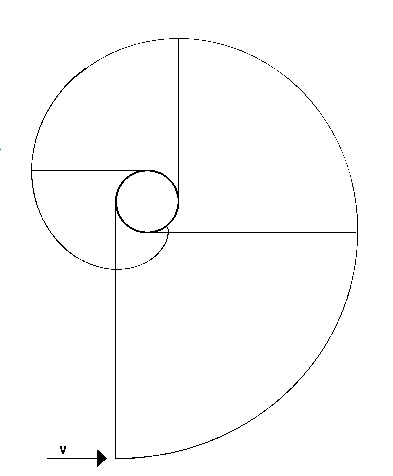
Here is the skater spiral. If we start at point V with a given radius seen by the attached rope, and walk, the rope will get shorter and shorter until we slam into the circular column in the middle. In this example the middle column is silent and the outside active.

…keeping the outside silent and the middle column active, by turning IT, we can turn into the arms which also shortens the radius.

skatespiral.jpg

Here’s the write up on the skater spiral for those interested. A little long, but an easy read.

[b]Skater’s Spiral

[Rope secured and wrapped around a pole of radius R, free end extending straight.] A rope is tied securely and wrapped around a cylindrical pillar in the center of a skating rink, with a portion of the rope extending straight out from the surface of the cylinder. A skater on frictionless ice grabs onto the extended length of the rope. The skater’s velocity is perpendicular to the straight portion of the rope when she grabs it. She retains her grip on the rope as she spirals around the pillar with continually decreasing radius. Assume that the rope segment she holds remains perfectly straight at all times. What is the skater’s speed when she crashes into the pillar?
Answer. The skater crashes into the pillar with the same speed she had when she grabbed the rope. And her velocity at the time she contacts the pillar is perpendicular to the pillar’s surface. The rope does no work on the skater. How can we know this without complicated analysis?

The rope has negligible mass compared to the skater, so we treat it as massless. The force the pillar exerts on the rope does no work, for the portion of rope wrapped around the pillar doesn’t have any component of motion along the rope’s length. Therefore the other end of the rope does no work on the skater. Since no work is done on the skater, the skater’s kinetic energy, and speed, remain constant.

[Tracing of the skater’s path.] It follows that at all times the rope is perpendicular to the skater’s velocity. That’s true, though not obvious, and not particularly easy to show directly. It’s probably a calculus problem. But you can get a lot of insight by taking a round jar lid, fastening a string to it, and placing it on a sheet of paper. Put a loop in the free end, and with a pencil in that loop hold the string taut and draw the path on the paper as you swing around the round jar lid. The path will end up with the curve closing in on the lid, and the path will be perpendicular to the lid’s rim where it hits. This picture was made in this way.

Consequences to ponder. The skater’s speed remains constant. What about her angular velocity and angular momentum?

Answer: Taking the fixed point at the center of the pillar as a center of torques, we see that the rope’s tension causes a torque on the pillar, giving the pillar and the Earth an angular momentum in the same sense as the skater’s angular velocity. Therefore the skater’s angular velocity and angular momentum decrease. (Her angular momentum reaches zero when she impacts the pillar.)

Another way to look at this: The rope exerts a torque on the skater. The lever arm of this force about the pillar’s center is just the radius of the pillar, R. At any instant the torque, R × F is a vector opposite in direction to the skater’s angular momentum, so this must decrease her angular momentum.

At the moment of her impact with the pillar, her angular momentum has become zero and she impacts with velocity that is directly toward the center of the pillar.

One reason people sometimes get off on the wrong track when analyzing this problem is their previous familiarity with problems of central force motion, where the force is always directed toward a fixed point. The force of tension on the skater with rope around the pillar is not directed toward a fixed point. For an example of central force motion, consider a skater on a frictionless rink, holding a rope that is fastened at a fixed point. Now, as time goes on, the rope length remains constant, and the skater’s motion is constant speed around a circle. Now suppose, due to some clever mechanism, the rope is continually shortened, perhaps by having it pass over a pulley at the center of the rink, and then to a motor winch. But we take care that the rope at the center always passes through a fixed point there. By insisting that the rope pass through a fixed point, we ensure that there’s no torque on it about that point. Now the angular momentum must be constant, as it always is in central force motion. So as the radius decreases, the skater’s speed must increase as she spirals toward the center. This tells us that work is being done on the skater. The skater’s velocity is no longer perpendicular to the rope, but has a small radial component. This means there’s a radial displacement toward the center, and the radial force is responsible for that displacement. That’s where the work is done on the skater—work done by the motor that drives the winch that’s shortening the rope.[/b]

Plenty of room here for rats, eagles, and other purveyors and seekers in this party ark on the high desert.
Room enough for some riddles and riddlers and rattled riddled riddling.

When and if the smoke clears long enough and the warped mirrors shatter, have a look at the link below to the abstract of “A rhetoric of riddles: Riddle solving as an analogy for rhetorical invention”. It is beyond my reach, but if I had to guess or puzzle it out, it says riddles are a good thing for exploring, learning, and writing. Other interpretations are welcome.
http://digitalcommons.unl.edu/dissertations/AAI9200141/

You forgot poems. :laughing:

The opening is the closing,
And closing the opening,
While an opening with closing is not the way,
To put linear at bay.

What do you think Mr Hogan is doing to cause the movement of the club you speak of?

Not doing any ‘one thing’ at the expense of another other than keeping the face open, but he is doing bunches of stuff to accomplish that- lowering into the ground, forearm rotation opening, etc, and this is layered into his intention. No one knows precisely what his intentions may have been in a global image sense that I am aware of now, but even smaller intentions, like an open face, can have major consequences in perception and perception is probably the biggest key in doing.

An example- if you are doing a standing still dribble with a basketball using only your right hand, in order to go seamlessly from a straight down dribble to a bounce pass to someone on your left, what would happen. You would do without knowing based on intention and skill of doing from practice, but the arm-hand orientation would change instantly to accomplish the task.

It’s all about intentions based on task perception. :slight_smile: