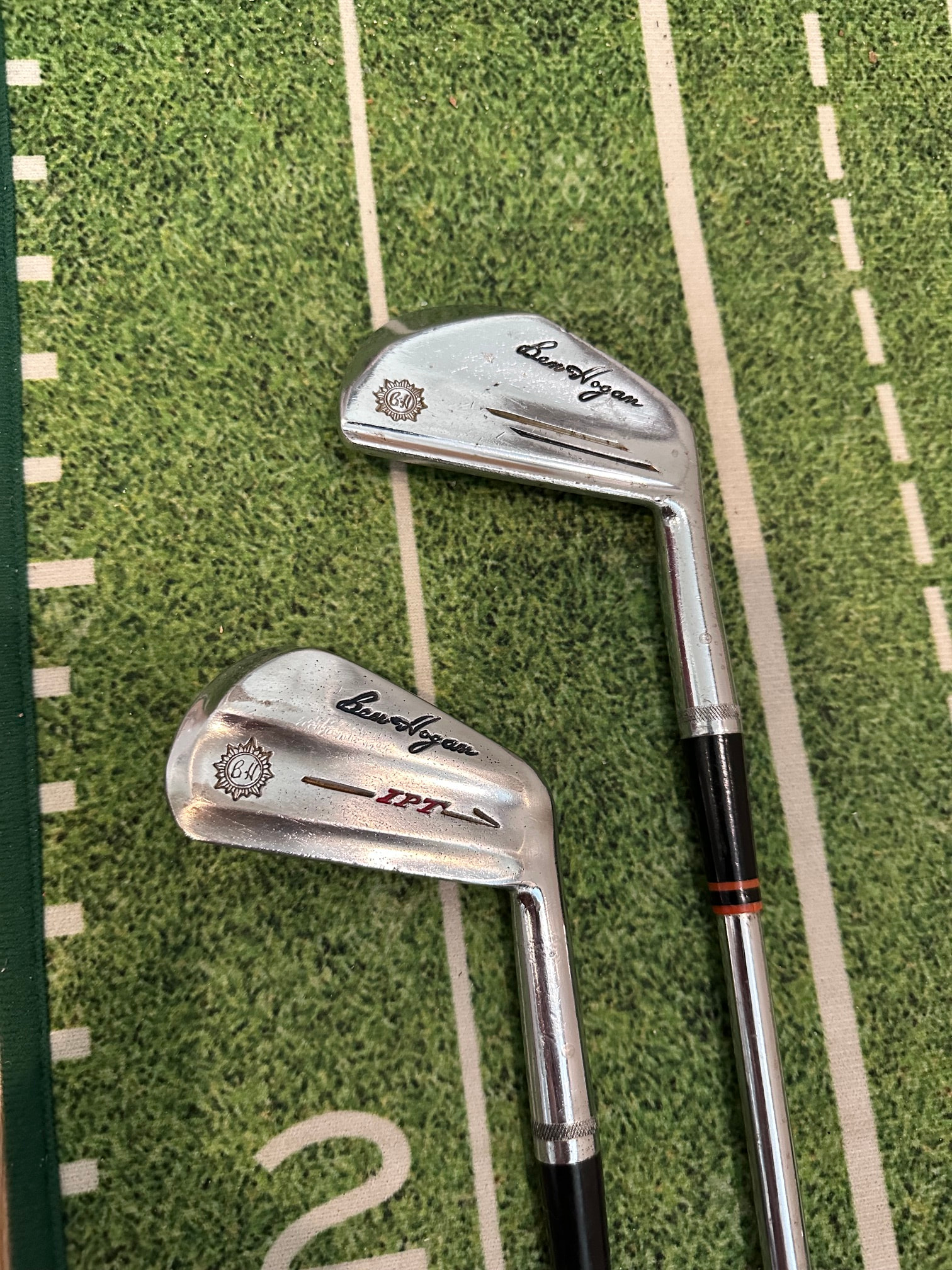
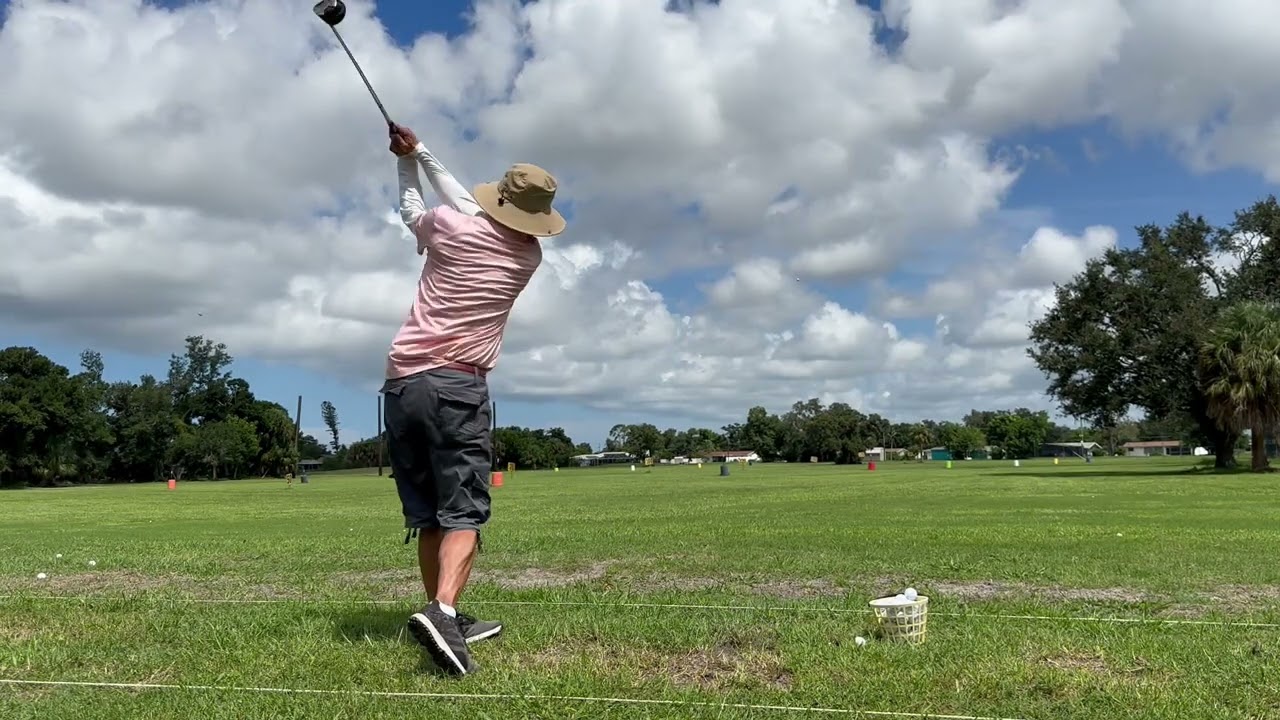
ABS lie angles 1960 Hogan Power Thrust irons
Today (August 5, 2026), I played a practice round with the
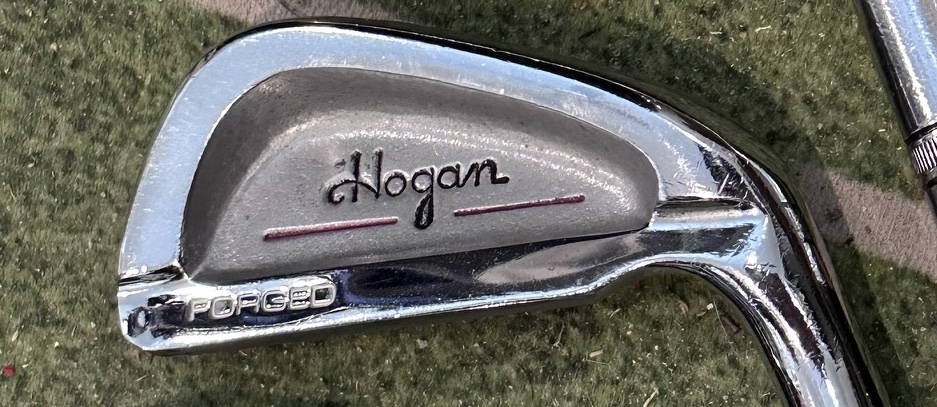
now-set-to-full-ABS-spec 1960 Hogan Power Thrust irons.
It was a great day. My current ABS swing really loves the ABS flat
lie angles. I hit some great iron shots (for my skill level), penetrating,
compression, straight. The Power Thrusts felt great. While I had to get
used to the shorter (standard-for-their-time) shaft lengths, I was able to
strike the sweet spot on these irons reliably and crisply.
So far, the “full ABS lie angle specs” experiment on my vintage iron sets is
a resounding success.
While of course there’s many factors at play here (notably I have been
drilling ABS / Hogan for 3.5 years now and my ABS skill is improving even
at age 67 1/2) … but I can certainly say, my old pre-ABS swing would
never have produced the shots that was able to hit today. I would say
even 6-9 months ago, my ABS skill level wasn’t high enough to strike
these irons this well. But today…… happiness.
As @blades4life has suggested above, at my age and now slowly
decreasing swing speed, I am happy that this set has True Temper “Rocket”
regular shafts. At my slower swing speed, ABS technique works well
with the regular shafts. My other stiff-shafted sets require do require
much more pivot effort.
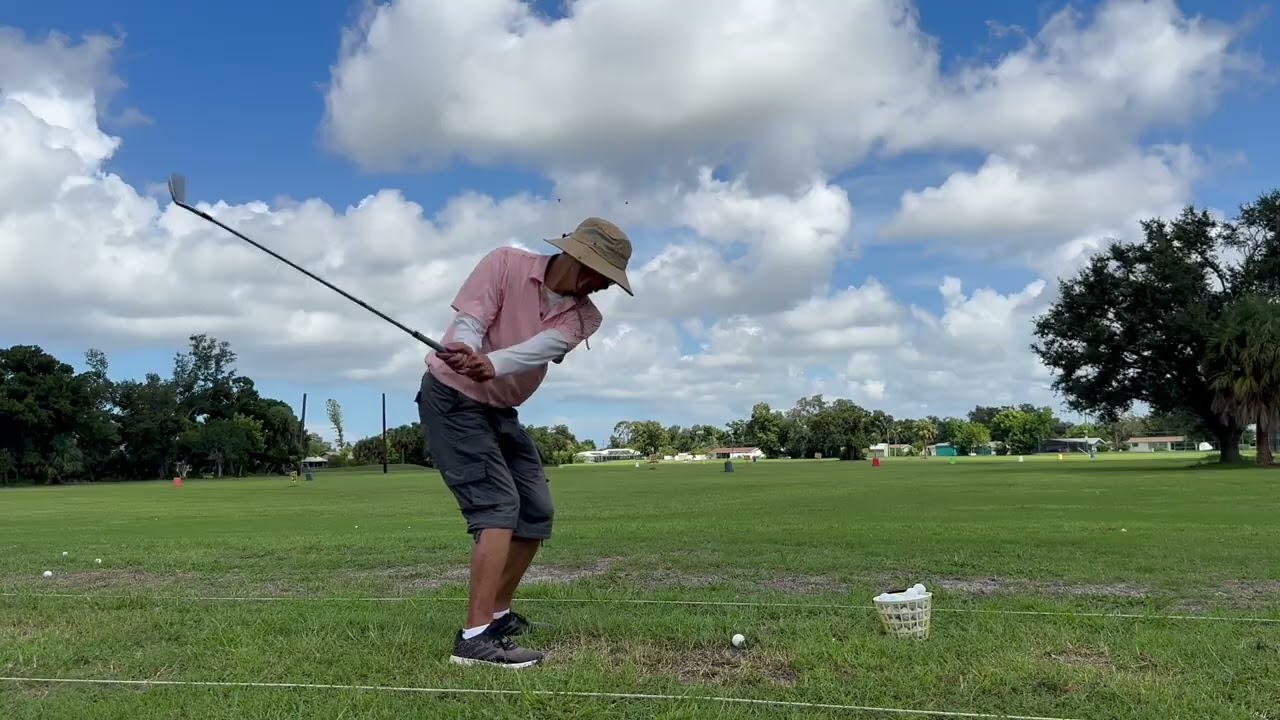
(I will get an update video on my swing posted to “Post Your Swing”
thread within the next couple of weeks. Who knows what we’ll see….)
For purposes of documentation, after a lot of trial and error,
here following is the lie angles that I am now setting on all my
standard length regular-shaft vintage iron sets.
LIE ANGLE CHART…….. John Sing’s …………. my guess estimate
Club…. ABS lie spec….. 1960 ABS Hogan … of Standard 1960 Hogan
………………………………… Power Thrust …… Lie angles
……………………………………………………………………………………………
……………………………………………………………………………… Club
……………………………………………………………………………… length
…………………………………………………………………………………………………
2………. 52/54 ……………….. 54 …………………. 55 ………………. 38.5”
3………. 53/55 ……………….. 55 …………………. 56 ………………. 38”
4………. 54/56 ……………….. 56 …………………. 57 ………………. 37.5”
5………. 55/57 ………………… 56 …………………. 58 ………………. 37”
6………. 56/58 ………………… 57 …………………. 59 ………………. 36.5”
7………. 56/58 ………………….57 …………………. 60 ………………. 36.25”
8………. 57/59 ………………… 58 ……………….… 61 ………………. 36"
9………. 57/59 ………………… 59 ……………….… 62 ……….……… 35.5”
E/PW… 58/60 ………………….59 …………………. 62………….……. 35.5”
Now, the experiment is far from over. I am next figuring out,
what to do with other sets that have longer shafts and/or
different characteristics; also, what lies to set my gap wedge at.
—————
1 - I am resetting my 1989 Hogan Edge regular shaft set to the same
above ABS specs. This is the same set where I went “near-ABS” (lie angles
were flatter than standard but did not go to able full ABS flat lies) and
I had lackluster results. When I get those back after being bent to above
full ABS specs, those also will be tested and we’ll see if “full-ABS-specs”
makes those sets much more playable for my current ABS swing.
————
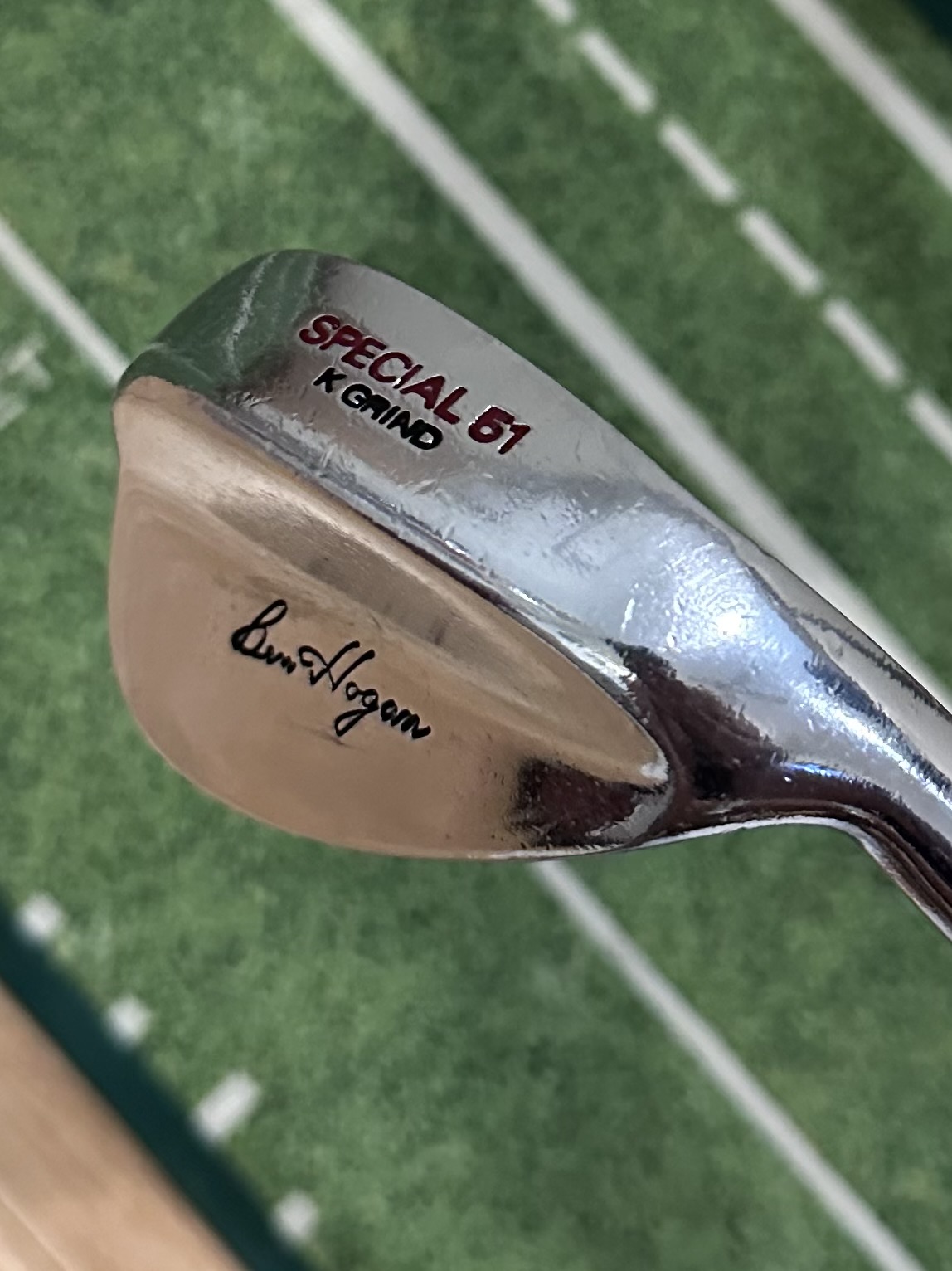
2 - I need to figure out what lie to set my 51 degree loft Hogan K-grind
gap wedge. I have set one of these to 59 degrees lie (from the previous
61 degrees I had them at) to make the gap wedge match the above
ABS specs. I am finding that for pitch shots, the 59 degree lie angle
gap wedge requires me to make some wedge technique modifications
compared to how I use the 61 degree lie angle gap wedge.
Specifically, with the flatter 59 degree lie angle gap wedge, on pitch
shots, I find I need to rotate much more ABS, with left shoulder and
orbit pull, in order to hit pitch shots well. Clearly, my wedge technique
and skill (or lack therefore) with the 61 degree lie angle gap wedge is
less ABS oriented. Even though that’s familiar, it’s worthwhile experiment
to see if I can learn to recreate my current pitching skill with a much
flatter gap wedge.
So I am side by side testing the 59 degree lie angle wedge with my 61 degree
lie angle gamer wedge, learning as I go. Stay tuned here.
———————
3 - Finally, I need to figure out what to do with my 1” over Hogan Apex
Plus irons which are my current gamers, as well as what lie angles to set
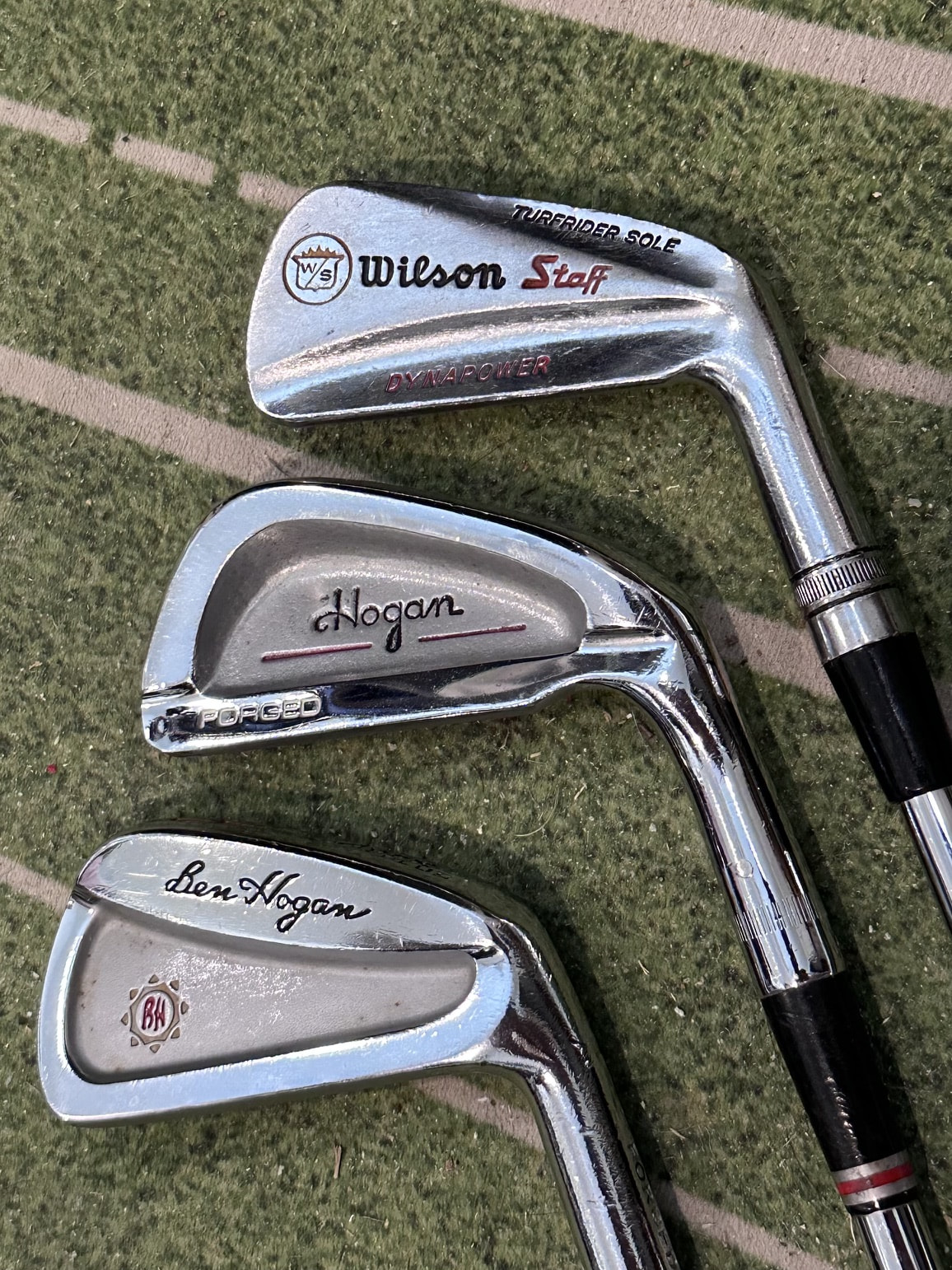
on the 1.5” over standard length 1961 Wilson Dynapower Turfriders
with Dynamic Gold S300 shafts, that I got at my local Goodwill. Someone
had done a nice job of refitting modern shafts to these clubs.
Since these clubs are longer length than the other vintage standard length
sets, conventional wisdom says I should just use the standard
rules of thumb for “extra length vs. lie angle adjustment” rules…….
However, I play the 2000 Hogan Apex Plus (Apex 4) as my gamers,
and even though their shafts are longer than my vintage sets,
and their current lie angles are slightly more upright than true ABS….
(their lie angle specs are in a previous table in a previous post
above in this thread)…..But I hit them so well, when I can get my
67.5 yr old body to execute ABS post-impact pivot thrust adequately
to handle them.
So for the time being, I am setting these 1961 Wilson Dynapower
Turfriders to the same specs as my 2000 Hogan Apex Plus
irons. We’ll see how that goes. Can always re-bend their lie angles
in future as needed.
———————————————
The joy of experimentation. I think at this point we can summarize
my experience so far, for what it’s worth:
A - full ABS lie angles have made all my regular shaft vintage golf iron sets play
much much better for my ABS swing. I really could not hit them
well with my ABS swing trying to hit their previous standard lie angles which are +3 to +5
degrees more upright.
B - The longer length, stiffer shafted iron sets, still are in continuing
experimentation mode. Stay tuned.
C - Flat wedge lie angles affect pitch shot and short game technique.
I am experimenting and (re)learning how some of that will work for me
with the ABS-flat gap wedge. Any thoughts or advice here???
C - Everyone is different. I’ve arrived at this through a ton of trial and
error. Learning every step of the way. Being open to things changing
as my ABS skill changes. So your mileage will probably vary also.
Paraphrasing Hogan, @lagpressure, and @twomasters: “we all have
to do enough reps to ‘dig it out of the dirt’ for ourselves and our
own body, nothing can replace doing the reps so that we develop
own body feels that work for us”. (This is why the Drills are so valuable!)
D - IMHO, ABS clearly provides
a proven guiding framework to make our pursuit worthwhile, we’re following
in proven footsteps.
—————————————
I hope documenting this ABS experimentation and experience is helpful
to others. Ideally, I hope it might accelerate or give others faster
time to their own results, by documenting what my experience has been.
Certainly, it’s been and continues to be a fun journey for me. Thx for ALL OF YOU
who are out there sharing info on this forum, I learn tons every day from all the
threads and ideas that are everywhere here.
John Sing
August 5, 2026
Venice, Florida, USA