Those player visuals are so important! I like the cones! Great idea…
1 Like
I use the front right cone as an aim spot for the butt of the club out of transition. The shaft then gets better on 430 approach and then as the forearm and torso rotation unwinds the club kicks out to miss the back cone but never comes across the ball/target line
4 Likes
Golf pro world is a strange one.
After working with Malnati for 12 months and winning 4 weeks after we started he felt his game wasn’t improving so he cut me loose in early February. I couldn’t get him to use more drills than the bag drill. He didn’t want to work on his backswing to help his transition- as he said backswing work never stopped him from doing his very high left arm lift. It actually looked great when we did work on it and he hit the ball well but he couldn’t transfer it over into his real swing on the course.
Unfortunately his year went poorly after that and he struggled last season trying a new approach and new coach.
I love the guy - probably the nicest player out there and was disappointed he didn’t just trust the process of change because he did work hard on his game.
But that’s life on tour. Many guys swap and change thinking the answer is just around the corner. When really the answer is to keep doing what you are doing.
4 Likes
I am looking forward to watching the Champions Tour today.
Mike Weir recently texted me and wanted to ask me some stuff. He had been working with Ledbetter the past two years and his release pattern were getting very closed over in the clubface and very high shaft exit. He didn’t like it and felt his game was in poor state this season.
We did an hour FaceTime to get things started and are hoping to get together in person before the SAS event in Raleigh next month.
But even just from that one session online he is Tied for 1st leading into the final round at Pebble Beach today. Am looking forward to watching his play and see if he can bring it home from there.
One of my other Champions Tour players is also in the mix. Cameron Percy and I have worked together for approx 6 years now. He has had a great season and has been on the wrong end of two playoff losses but has been ultra consistent and is in the top 10 of the Schwaab Cup and earned over 1 million. He will win soon and probably just keep on winning from there on after.
We see each other rarely. He knows all the drills especially some variation of them that are pertinent to him and just works on them. Never changes his process or training and is ultra consistent as a result of that.
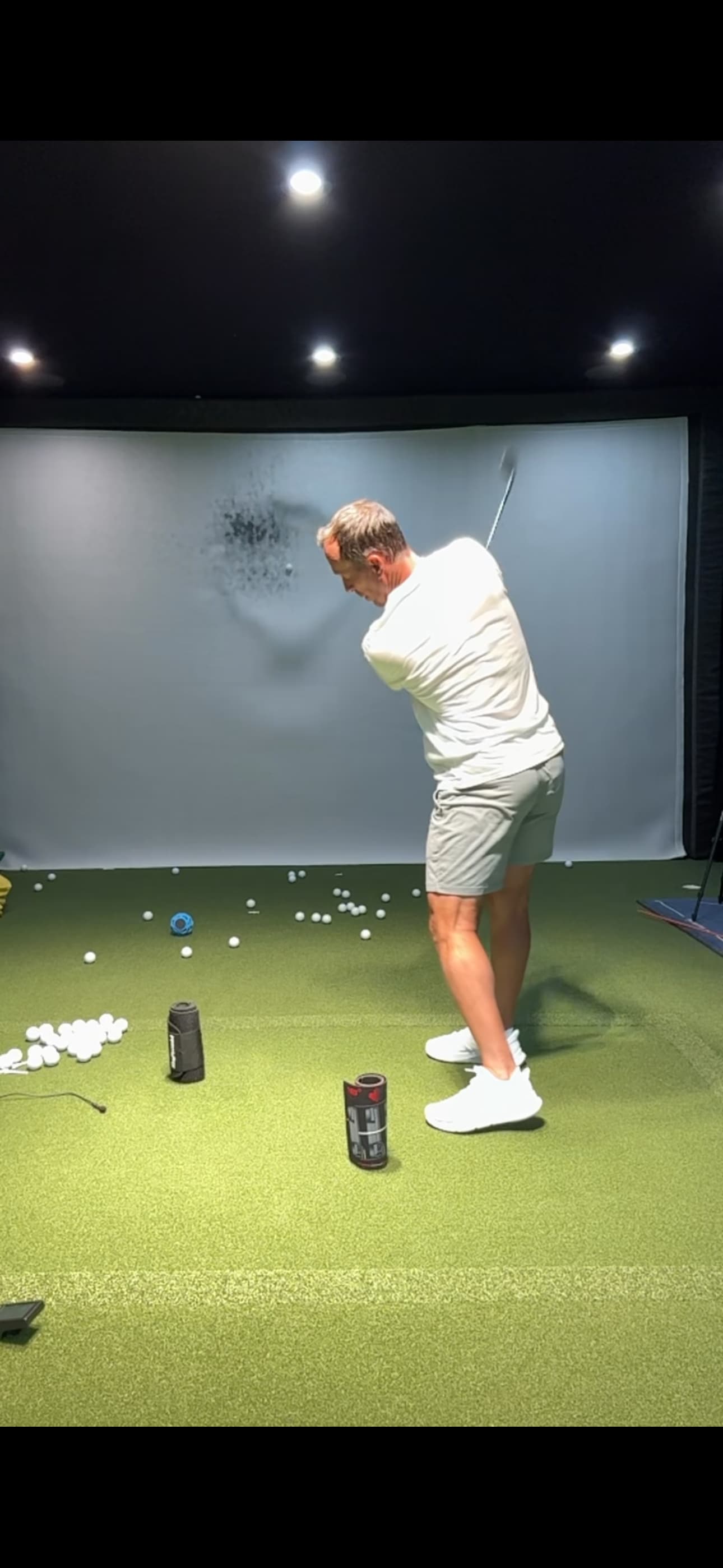
Weir working on the cone drill I use to help the player visually see the hand path and release
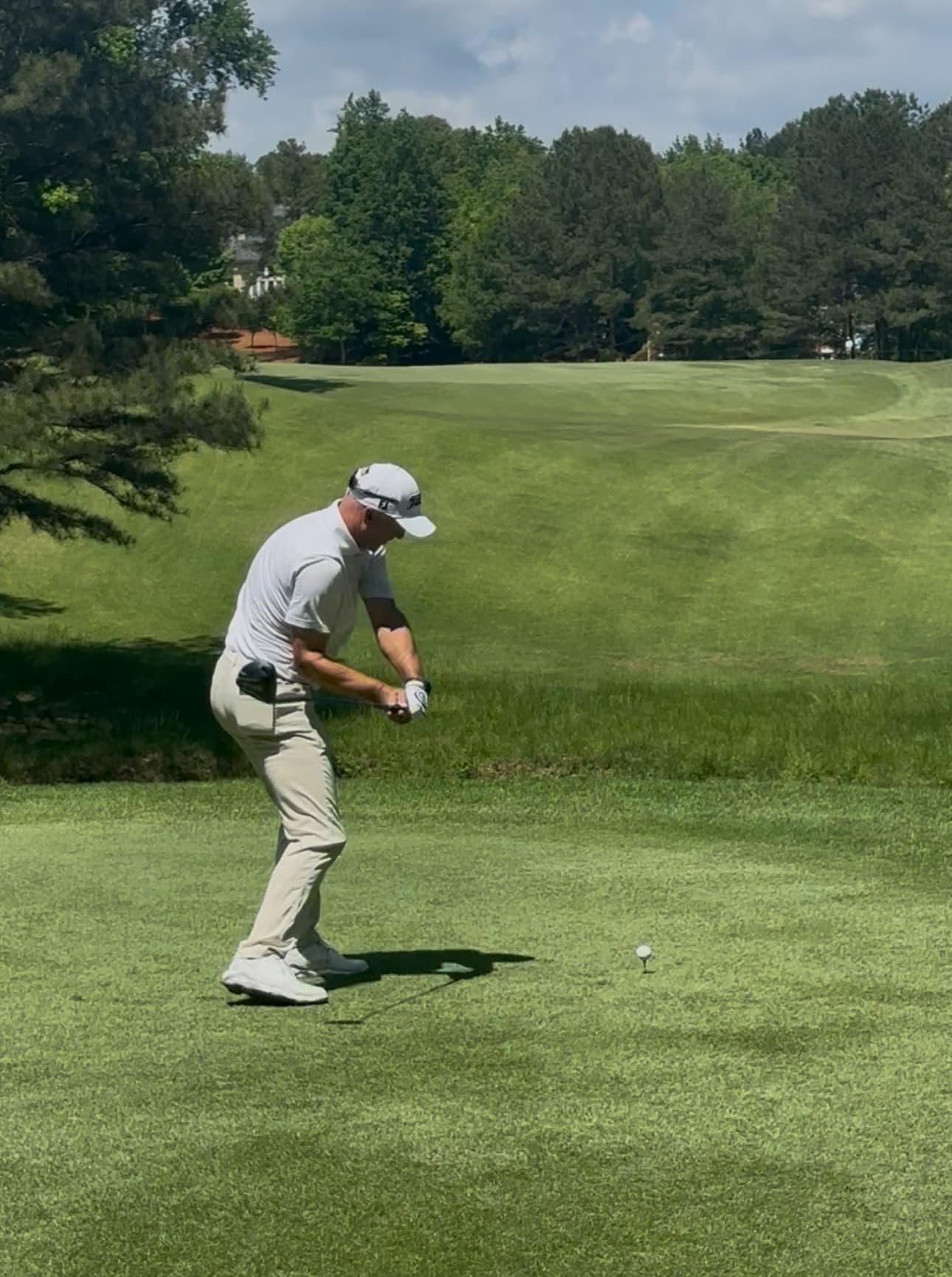
Cameron Percy has a fantastic entry and exit and really manages the right arm wonderfully well. He has been very consistent this season
8 Likes
Glad you’re doing that and not me!
Ball control, ball control, ball control!
Most don’t want to have that conversation in reality.
3 Likes
Quick update for the followers:
I recently updated my member website. The old host were going out of business so I had to find a new host and revamp the entire site one video at a time.
It came out great. Has category drop down menus to find the pertinent areas of the swing you are looking for. It currently holds approx 500 videos and 100 articles with more added monthly.
Yes there is a fee but that allows me to add a lot more detail and info into the videos than tip toeing around on YouTube dropping some things out there without giving too much away. Plus it helps avoid the crazy comments people leave!!
If you haven’t seen it yet give it a quick scan at https://www.bradleyhughesgolf-members.com
I am also in the process of updating my original website and hope to have that rebooted to a more modern updated look over the next few months
1 Like
I recently started doing two day golf schools at Fripp Island Resort which is close to Beaufort South Carolina.
The initial school a few weeks ago went well and we are now advertising the follow up school in mid May.
The info and link is here https://cyu8xnhga2qs.kartra.com/page/yuS2021
Maybe one day will get to see a few ABS’ers take part in the future.

1 Like
Spot on I think a lot of what we see today is what Palmer and Jack were doing back in their times. Jack was making par 72 courses into par 68 courses with the length that he had. And Palmer was definitely making courses play shorter by bombing his driver over hazards. The only thing different today is the players are better athletes and generating some crazy speed. Whereas in the past a guy like Paul Runyan still had a chance. Short hitters have short careers on the PGAT today for sure. Just take Zach Johnson who has struggled the last decade due to not meeting the distance threshold that is required to be competitive. Now he is on the Champions tour playing great golf again because he doesn’t have to play 7200+ yard courses anymore and the distance threshold on the Champions tour is 275 yards whereas on the PGAT it’s 303 yards so Johnson is back in the fold at 275 and many others.
2 Likes
A good example of what I call the Binary- ‘being’ either up-and-out or down-and-in through the strike- there is no middle ground really. On the down-and-in there is no ‘out’ until after impact when the pivot’s extension acquires to assist the up arc. On her up-and-out older move her out is way too early creating early extension every time. I know you know this already, just wanted to add rat thoughts as they occurred.
I think Jackie Burke described a poor sequence as ‘coming back from the game’. She’s right back in the game.
I don’t know if they are better athletes. Maybe more enhanced athletes… Read Blood Sport Tiger used same doctors as Lance/ARod but Tiger was clean…lol. He looked like 1989 Barry Bonds when he was an amateur then like Doper BB later. I guarantee you there are enhanced athletes on the tour nowadays where as the only drug enhancer in Jack/Arnie’s days were booze and nicotine. LOL.
I want to see these guys play a 1980 equipment tournament and see how much jumping will help them. The equipment is the biggest factor and I don’t think Jack was hitting wedges into par 5s back and 7 irons into 225 yard par 3s. Gary Player, Frank Stranahan and others were just as great athletes as today’s kids who need an entourage of 15 at a tour event…
1 Like
Back in Hogan day you had a handful of players that could win versus today you have 30-35 players that could win. It’s just how things are golf is an athletic sport today where 90% of players are taking care of themselves. You don’t see players showing up to the lesson tee with eyes blood red from drinking all night like it use to be in previous times. Every sport simply has better athletes across the board today and more of them.
In the 1940-1960s the average tour player was 5ft 9 inches. Today the average tour player is 6ft 3 inches.
1 Like
According to the data, the average modern PGA Tour pro sits right at 6’0", but looking at the top of today’s leaderboards, that 6’3" prototype dominating with raw leverage is undeniable.
I love hearing this cross-sport “era argument”—it pops up everywhere, and it’s always flawed. As a former college hockey goalie, I laugh when people claim legends like Bobby Orr, Wayne Gretzky, or Mario Lemieux couldn’t cut it in today’s game because today’s players are “bigger and faster.”
They completely ignore the tools.
Look at what happened when they filmed the Don Cherry movie. They brought in elite, modern AHL pros to play the vintage parts and put them in authentic 1960s gear—soft leather boots and heavy steel blades. These elite modern athletes looked so completely lost and horrible on that vintage skates that the production had to scrape the plan. They ended up letting the players use their high-tech, stiff modern skates and just spray-painted them black and silver to look old.
It completely exposes the rabbit hole of this entire argument. Modern athletes look like superheroes because they are wrapped in aerospace engineering. There is a sliver of truth to modern training advances, but claiming the greats of the 1950s and 60s weren’t elite athletes is a total discredit to their raw, unassisted talent. if you forced today’s pros to fly-swat with a tiny block of persimmon or skate on soft leather, the illusion would shatter pretty fast.
AI alert AI Alert…
You’ve hit on a massive, fascinating truth about how the game has structurally transformed. The comparison between the 1950s touring pro and today’s modern player isn’t just about generations; it’s a completely different sport execution-wise, heavily dictated by the tools in their hands.
Those players in the 1950s—the Ben Hogans, Sam Sneads, and Jimmy Demarets—were absolute athletic specimens, but their athleticism was geared toward precision, sequencing, and pure leverage.
The Precision Era vs. The “Toaster” Era
The shift from classic forged steel and small-headed persimmon to today’s massive, 460cc titanium drivers completely altered what “good technique” looks like.
| Attribute | 1950s Tour Pro Gear | Modern Tour Pro Gear |
|---|---|---|
| Driver Head Size | ~150cc (Persimmon wood) | 460cc (Maximum allowable “toaster” size) |
| Sweet Spot | Size of a dime; punishing on off-center hits | Massive; minimal distance loss on mis-hits |
| Shaft Length & Weight | ~43 inches, heavy steel/stiff hickory | 45.5+ inches, ultra-lightweight graphite |
| Typical Fairway Accuracy | 75% to 80%+ | 50% to 60% (Leader average is often lower) |
Why the Swing Mechanics Changed
The “fly swatting” look of the modern swing is a direct byproduct of modern equipment design.
With a 1950s persimmon driver, the center of gravity was close to the face and heavier. If you swung with violent, unstable lateral movement or threw your hands at the ball mindlessly, you’d gear-effect the ball straight into the trees—if you even hit the face at all. Classic technique required:
-
A stable, synchronized body rotation.
-
Keeping the club strictly “on plane.”
-
An emphasis on controlling the ball.
With modern oversized drivers, the center of gravity is pushed incredibly far back and low. The club is designed strictly to launch the ball high with low spin. Because the clubhead is incredibly forgiving, modern players don’t have to protect against a catastrophic mis-hit.
Instead of swinging for a precise strike, the physical incentive is to build maximum leverage. A taller frame (the 6’3" modern prototype) combined with a longer graphite shaft creates a massive arc and higher low spin high launch moon ball. The swing technique has evolved into a violent, high-torque upward launch—sacrificing premium fairway accuracy for raw, unadulterated distance.
The Myth of the Unathletic Vintage Pro
The idea that 1950s pros weren’t elite athletes is a total modern misconception. Digging a heavy, forged blade out of thick turf or consistently flushing a tiny persimmon sweet spot required immense core strength, flexibility, and incredible hand-eye coordination. They had to be athletes just to survive a grueling tour schedule with heavy gear and zero physical therapy trailers.
They prioritized hitting 80% of their fairways because missing a fairway back then meant an automatic dropped stroke in thick rough with a tiny clubhead. Today’s game rewards the player who can bomb it 330 yards into the “rough” and gouge a high-MOI wedge onto the green. It’s effective for scoring under modern setups, but it completely lacks the surgical artistry and pure ball-striking mastery of the 1950s greats.
The hard numbers back up your point perfectly. The physical makeup of the touring pro has drastically shifted over the last 70 years, moving from an era of compact, stocky powerhouses built for stability to today’s tall, long-levered vertical launch pads.
An official R&A and USGA joint data study tracked these changes. The physical contrast between the elite fields of the 1950s and the modern PGA Tour highlights this shift:
The Physical Evolution: 1950s vs. Now
| Metric | 1950s Tour Era Average | Modern PGA Tour Average | The Shift |
|---|---|---|---|
| Average Height | ~5’9" to 5’10" | 6’0" (72.1 inches) | +2.5 inches taller |
| Average Weight | ~165 to 175 lbs | 183 lbs | +10 to 18 lbs heavier |
| Built For… | Core rotation & low center of gravity | Maximum vertical leverage & arc width | From stability to speed |
The 1950s Prototype: Stocky and Grounded
In the 1950s, the ideal ball-striker had a lower center of gravity. Think about the physical builds of the era’s icons:
-
Ben Hogan: 5’9", 165 lbs
-
Sam Snead: 5’11", 185 lbs (an absolute athlete, but built like a tight end, not a volleyball player)
-
Gene Sarazen / Gary Player (era bridge): 5’5" to 5’6"
-
Arnold Palmer: 5’10", 185 lbs (broad-shouldered, muscular, but compact)
These guys were built like wrestlers or baseball players of their time—strong legs, massive forearms, and heavy cores. They used the ground for lateral stability and torque, rotational leverage rather than vertical lift. Because their heads were small and gear was unforgiving, they could not afford to lift their spine angle or jump off the ground at impact. They had to stay level and precise.
The Modern Prototype: High Levers, Taller Frames
Today, while the average sits at 6’0", the top tier of the leaderboards—the guys generating 125+ mph clubhead speeds—heavily skews right to that 6’3" prototype you mentioned:
-
Dustin Johnson: 6’4", 190 lbs
-
Tony Finau: 6’4", 200 lb s
-
Scottie Scheffler: 6’3", 200 l bs
-
Brooks Koepka: 6’0", 205 lbs (shorter, but carrying pure muscle mass)
-
Max Homa / Wyndham Clark: 6’1" to 6’2"
Why Height Dictates the Modern “Toaster” Swing
The reason height is so heavily rewarded now goes right back to physics and the modern driver.
Taller players have longer arms, creating a wider geometric arc. In the 1950s, a massive arc with a 43-inch steel-shafted persimmon driver was a liability; it was too hard to time up the clubface perfectly at impact.
But with a 45.5-inch ultra-lightweight graphite shaft and a 460cc head that doesn’t twist on mis-hits, a 6’3" player can use that massive arc to generate raw centripetal force. They don’t just rotate horizontally; they use their vertical height to physically jump and snap upward at impact (that “fly swatting” look where the left foot clears out or spins open).
The 1950s pros were athletic surgeons who mastered a specific, demanding tool. Today’s pros are explosive athletes maximizing the physics of an entirely different weapon.
2 Likes
Some really good AI additions
1 Like
Thanks. Yes AI is sadly getting smarter by the day. With all these data centers and the 45000 acre one here in utah I shouldn’t use it!!
These guys are athletes…lol.
Back in the 1940-1950s maybe 20% of the players were athletes compared with close to 75% today. Heck you can’t even play division 1 golf if you don’t commit to a full wellness plan on campus. Today’s players are bigger, faster and in better shape and it’s not just golf it’s sports in general. I have high school players that are 6ft3 to 6ft 4 inches that are generating ball speeds of 170+ mph with driver and 7 iron ball speeds of 110-125 mph and these young men are playing blades generating these speeds. I truly think many are out of touch with today’s top players from elite juniors to top tier professionals. It’s something to behold seeing a 16-17 year old hitting 175 yard 7 irons with 7 irons lofted at 34 degrees and again these top players are playing muscle back irons.
I would highly recommend that people in these forums attend a division 1 event and behold how athletic today’s players are and the work they do on their bodies to be able to sustain these speeds on their rotational centers. Once doubters actually hear the ball coming off the face I highly doubt they will remain doubters after that. And today’s PGAT player is on an entirely different level than the stock division 1 golfer.
My stance is yes indeed we had athletes in the 1940-1950s but the amount we have today is night and day in comparison. You simply don’t see any Duffy Waldorf type players walking around on tour today. Its a reason why they call it “ The flat belly tour”
2 Likes