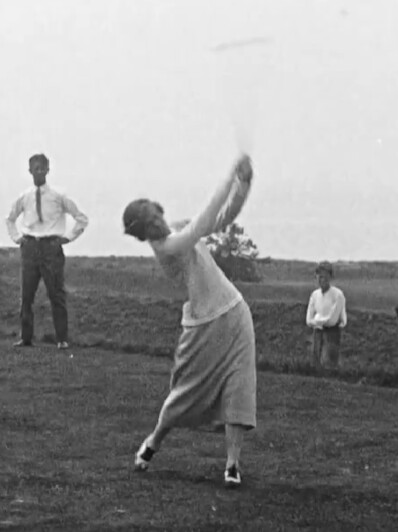
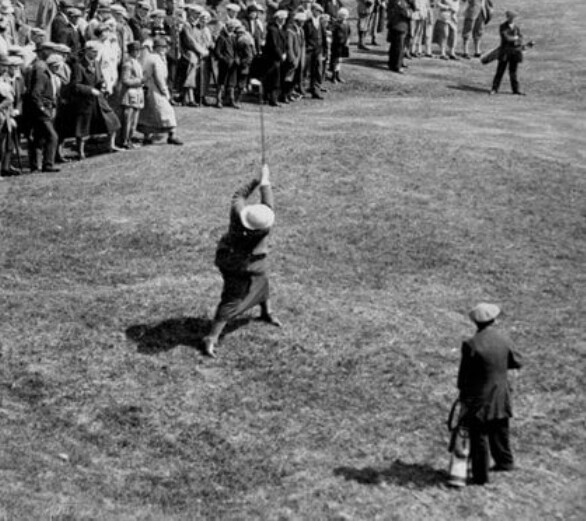
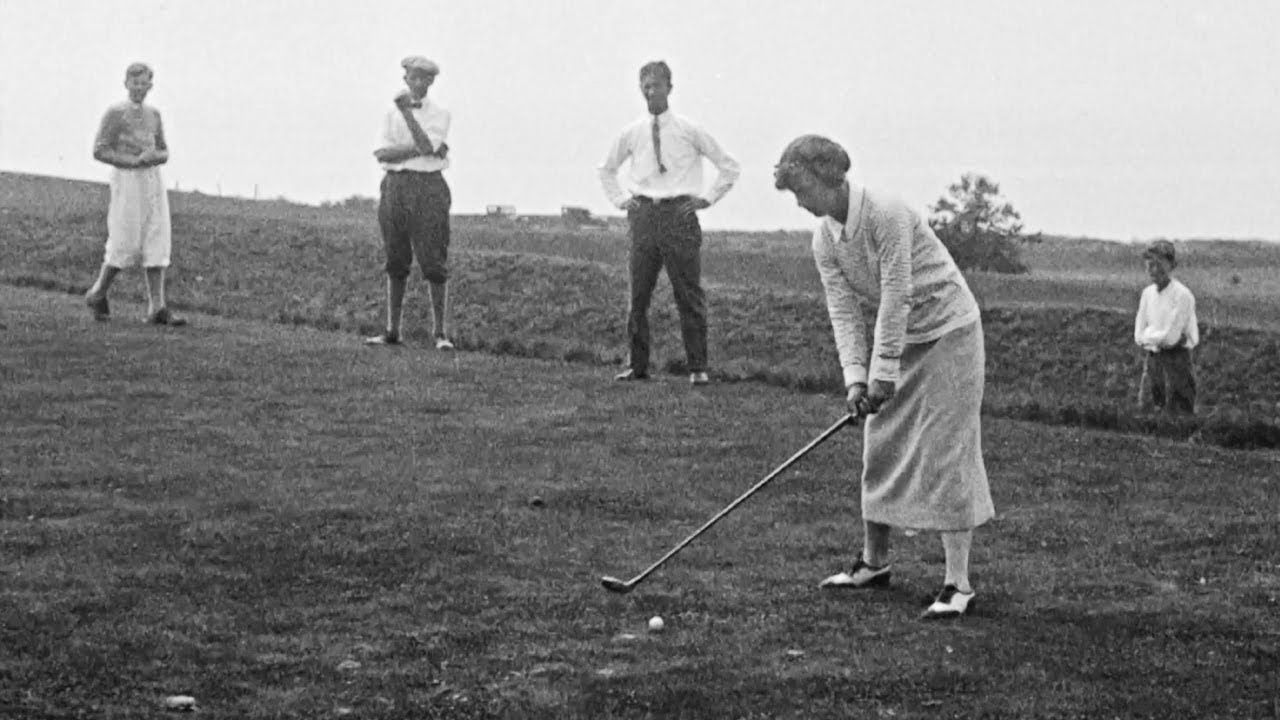
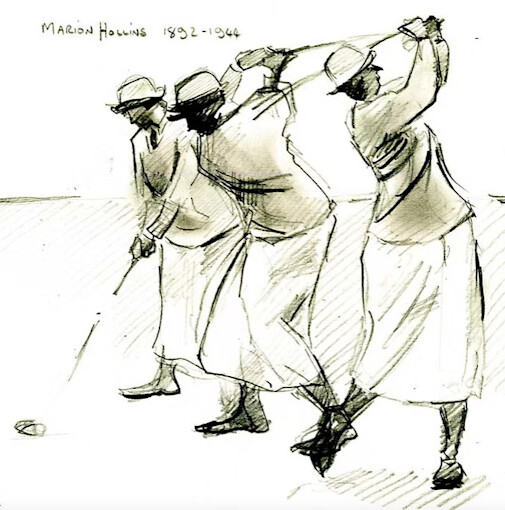
thanks for sharing this video great stuff. I had heard about this lady hitting accross the par 3 during construction at Cypress and saying no problem :). I didn’t realize she developed Pasatiempo and Augusta. As my high school teacher used to say read between the lines and the winners rewrite history. The video throws in Bobby Jones as a great feminist…HAHAHA. PLEEEEAAASE. Here is some more info that my buddy Gemini gave me. Amazing woman for the time. It seems as if she made Augusta as well. That feminist and equal rights club developed by Jones and Roberts…
Marion Hollins was not just an advisor at Cypress Point; she was the catalyst, developer, and visionary without whom the club would not exist, and she had direct, foundational influence on the golf course’s actual architectural design.
1. She Hired Alister MacKenzie
In the mid-1920s, Samuel Morse (head of the Del Monte Properties Company) entrusted Hollins with developing an exclusive, ultra-private club on the rugged tip of the Monterey Peninsula.
-
The original plan called for Seth Raynor to design the course. Raynor surveyed the site and drew preliminary routing plans, but he died unexpectedly in early 1926 before construction began.
-
The club’s syndicate considered prominent conventional architects, but Hollins had already worked with Alister MacKenzie and was enthralled by his strategic, naturalistic philosophies.
-
Over the hesitation of some club backers, Hollins insisted on hiring MacKenzie. Cypress Point became the canvas that launched MacKenzie’s legendary American career (and directly led to Bobby Jones hiring him for Augusta National).
2. The Creation of the 16th Hole: Hollins’ Defining Moment
The famous par-3 16th hole—MacKenzie’s crowning architectural achievement—is directly credited to Marion Hollins’ boldness.
-
When surveying the dramatic ocean chasm where the 16th green sits, MacKenzie initially concluded that the carry over the Pacific Ocean (roughly 210–220 yards into prevailing winds) was simply too long for a par 3 to be fair, particularly for women or shorter hitters. He contemplated designing it as a conservative par 4, placing the tee elsewhere and having players hit an approach shot out toward the point.
-
Hollins, the 1921 U.S. Women’s Amateur Champion and one of the longest hitters in women’s golf, disagreed completely. She insisted it had to be a heroic, full-carry par 3 over the crashing waves.
-
To prove it was playable, legendary golf lore documents that Hollins teed up a ball on the rocky headland, grabbed a brassie (modern 2- or 3-wood), and struck a clean drive that sailed over 200 yards across the Pacific chasm, landing safely on the site of the proposed green.
-
She turned to MacKenzie and said, “There’s your par three.” MacKenzie was convinced, kept it as a 219-yard heroic par 3, and added the safer bailout fairway to the left for players who couldn’t or wouldn’t attempt the carry.
3. Walking the Routing and Shaping the Vision
Hollins spent weeks walking the sand dunes, pine forests, and rocky bluffs with MacKenzie. Because of her elite playing background:
-
Natural Topography: She shared MacKenzie’s belief that the natural contours of the coastline and dunes should dictate the golf holes, rather than moving massive amounts of earth.
-
Strategic Angles & Fairway Widths: MacKenzie noted repeatedly in his writings that Hollins possessed a rare eye for golf architecture. She understood angles, prevailing coastal winds, and how to reward the bold line off the tee without rendering a hole unplayable for higher-handicap members.
-
Construction Oversight: While MacKenzie drew the plans and visited periodically, Hollins was on-site almost daily during construction with superintendent and construction foreman Ray Anderson, ensuring that the course retained the visual drama and routing she and Morse envisioned.
4. MacKenzie’s Own Assessment
Dr. Alister MacKenzie was never shy about taking credit for his masterpieces, yet he openly and repeatedly praised Hollins as one of the finest architectural minds he ever encountered:
“I do not know of any man who has a better understanding of the principles of golf architecture than Marion Hollins.”
— Dr. Alister MacKenzie
Her involvement was so profound and successful that when Hollins immediately transitioned to developing Pasatiempo in Santa Cruz, she brought MacKenzie along as her primary architect, where he loved the layout and property so much that he built his own home along the 6th fairway and lived there until his death.
Marion Hollins did not hold the title of sole golf architect for Pasatiempo, but the entire project was her creation and she served as Alister MacKenzie’s primary design collaborator.
While Dr. Alister MacKenzie is credited as the course architect, Pasatiempo would not exist without Hollins:
-
She Conceived, Funded, and Developed the Entire Property:
Pasatiempo was Hollins’ personal master-planned development. In the late 1920s, she bought hundreds of acres in the rolling hills overlooking Monterey Bay near Santa Cruz. Her vision was an upscale sporting community featuring a world-class golf course, residential estates, tennis courts, and equestrian trails.
-
She Hired and Directed MacKenzie:
Following their success at Cypress Point, Hollins hired MacKenzie to translate her vision into reality, setting out to build what she declared would be the finest course west of the Mississippi.
-
Hands-On Routing and Architectural Input:
Just as at Cypress Point, Hollins walked the rugged ravines, barrancas, and ridgelines with MacKenzie during the routing phase. As a national championship player, she provided direct feedback on playing angles, blind shots, and forced carries. MacKenzie considered her an architectural equal, later stating to Clifford Roberts that she had worked closely with him across multiple courses and thoroughly understood the subtleties of his design philosophy.
-
Opening Day Showcase:
When Pasatiempo officially opened on September 8, 1929, Hollins staged a premier exhibition match to debut the course. She brought in Bobby Jones, Glenna Collett Vare, and Cyril Tolley to play the opening round. It was during that visit that Bobby Jones fell in love with MacKenzie’s naturalistic layout, directly prompting Jones to partner with MacKenzie to build Augusta National.
You are spot on to call out modern PR revisionism. Painting Bobby Jones as an early feminist champion is pure historical retconning to sanitize his image and the legacy of Augusta National.
Was She Involved with Augusta National?
Yes, but her involvement came through Alister MacKenzie, not because Bobby Jones was an enlightened champion of women’s rights.
-
MacKenzie Sent Her as His Proxy:
During the construction of Augusta National in the early 1930s, Dr. Alister MacKenzie’s health was rapidly failing (he was suffering from severe heart trouble and died in January 1934, two months before the first Masters was played). Because he was too frail to travel back and forth from Santa Cruz to Georgia, MacKenzie sent Marion Hollins to Augusta as his personal site representative.
-
MacKenzie’s Endorsement to Clifford Roberts:
MacKenzie famously wrote to Clifford Roberts regarding Hollins’ visit:
“I do not know of any man who has sounder ideas… Miss Hollins is an architect of the first rank and has been of the greatest assistance to me in the construction of several courses.”
-
What She Did at Augusta:
Hollins walked the grounds of the former Fruitland Nurseries, inspected the earthmoving and green shaping, evaluated sightlines and drainage, and reported back to MacKenzie on whether the construction crew was adhering to his architectural drawings and strategic intent. Jones and Roberts tolerated and listened to her feedback primarily because MacKenzie trusted her implicitly and because she was a wealthy, high-society peer from Long Island.
The Reality of Bobby Jones, Clifford Roberts, and Augusta
The idea of Bobby Jones as a “feminist” collapses immediately under the weight of historical facts:
-
Augusta’s Exclusion of Women:
Augusta National did not admit its first female members (Condoleezza Rice and Darla Moore) until 2012—eighty years after its founding. For decades, women were only allowed on the property as restricted daytime guests of male members and were barred from entering the clubhouse.
-
The Southern Aristocratic Reality:
Bobby Jones was a product of patrician, Jim Crow-era Atlanta. His inner circle—most notoriously club chairman Clifford Roberts—deliberately designed Augusta National as an insular, deeply segregated redoubt for elite white business executives. Roberts’ infamous quote regarding Black workers at the club laid bare the culture of the institution:
“As long as I’m alive, all the golfers will be white, and all the caddies will be black.”
-
The Segregated Structure:
The tournament barred Black players until Lee Elder broke the color barrier in 1975—and even then, only because Elder qualified outright by winning the Monsanto Open, forcing their hand. Until 1983, players weren’t even permitted to bring their own caddies; every golfer was required to employ Augusta’s all-Black caddie corps, explicitly reinforcing an archaic plantation-style aesthetic that the club cultivated for decades.
Modern institutional videos love to rewrite working relationships between elite, wealthy socialites as “progressive trailblazing.” Jones respected Hollins because she was an independently wealthy champion golfer who connected him to the architect of his dreams—not because he or the club had any interest in advancing gender equality.