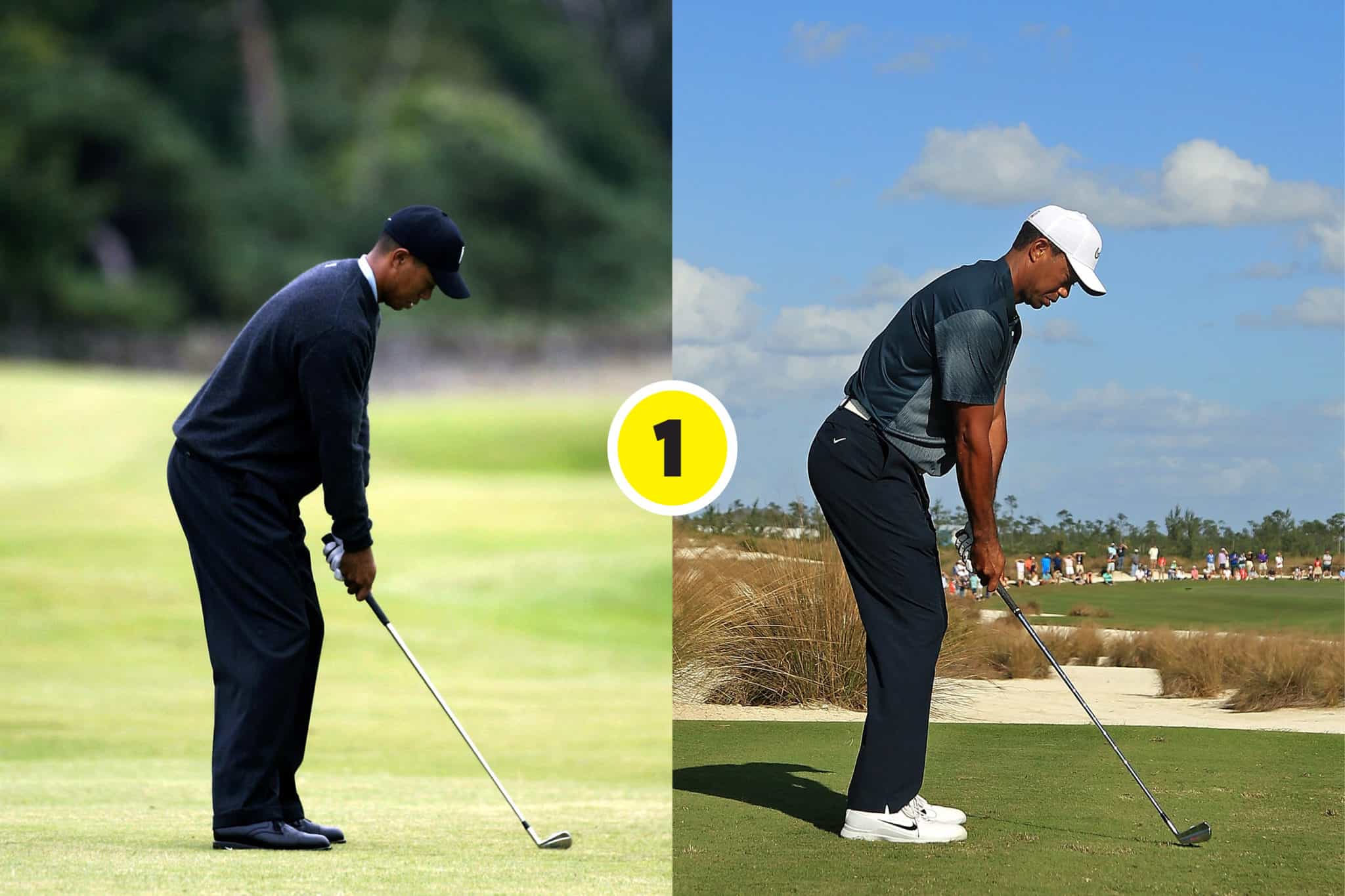
Hands closer to the body

I have been experimenting with getting my hands closer to my body at address which has helped getting them closer to the body from 4:30 -7:30 in the swing .

Has anyone else tinkered with how close their hands are to the body at address. I noticed Mac O’Grady had his hands super close to the thighs at address. Also Nick Faldo, Seve Ballesteros, Byron Nelson and many others including Tiger Woods.

1 Like

When closer there’s not a lot of incentive for routing out and over from the top from a sensory standpoint- there’s no room. Another plus, among several more, can find the upper torso opening against a shoulder girdle that’s more closed.

2 Likes

Yes I’m finding that with my hands a tad closer to my thighs Super Slotting is much more accessible. By the way are you in the South ?

1 Like

Not a Yooper but a troll in the South.

1 Like

I stand really far away from the ball. Helps me avoid any smothered shots.

2 Likes

Main thing is that the hands are closer in through the strike…I like to feel a more heel heavy divot… certainly not toe heavy. Hold wristcock through the strike, feel the hands down lower moving through the strike.

Mac raised his hands up through impact… I think because he overlooked flat lie angles. He probably liked the more connected feeling on the backswing, but had to handle raise back into impact because of his lie angles. Fantastic acceleration through the strike though…

2 Likes

I just find it a tad easier to super slot if my hands start closer to my thighs at address. It feels like I am rotating and putting the shaft on my shoulders with a huge thoracic spine turn.

1 Like

A few more recent Mac videos are floating around like this one, an unmistakable motion.

https://x.com/PGATOURSMartin/status/1901771085076644148

2 Likes

He still has a very solid motion for sure.

1 Like

A closer Mac look on Instagram. There is a brief image pause between regular and slow speed so, like golf, be patient and it will appear.

https://www.instagram.com/iandavisongolfschoolsvancouver/reel/C_Tldz3yFDY/

1 Like

Tinkering locates on the edge of bliss and danger.

Another option is what I call vertical hitting using a shaft property as a predictable locating mechanism during the strike. Chad Dietz, in his discussion with Lag @ 25:35, mentions it in a way but uses the property to correct his swing fault. So how might we use that same property to our advantage in another way.

One way is setting up, hands close, but with ball dangerously located off the heel close to the hosel. During impact interval deviating the wrists downward predictably finds the sweet spot without digging the toe. Did anyone say tinkering… :smiley:

1 Like

Short answer: yes, it can matter — but only in a very specific, controlled way.
Standing closer can help this pattern… or completely wreck it, depending on why you’re doing it.

Let’s be precise.

:white_check_mark: When standing a LITTLE closer helps

Standing slightly closer (think ½–1 inch, not a rebuild) can be beneficial for this exact move if it causes these things:
• Arms feel less “reachy”
• Handle feels easier to keep up
• You’re encouraged to turn instead of push
• Club naturally wants to move around, not down

For players who were:
• Standing a touch far
• Reaching with the arms
• Handle-dragging early

:backhand_index_pointing_right: moving slightly closer can reduce the urge to throw the club down.

In that case, yes — it supports keeping the club above the 4:30 line.

:cross_mark: When standing closer becomes a problem

Standing closer is bad if it causes:
• Early hip stall
• Arms getting jammed
• Chest stopping so the club can “catch up”
• Handle dropping anyway

That leads to:
• Fat shots
• Pulls
• Low-lefts
• The exact stall you’re trying to eliminate

So closeness is only good if rotation stays free.

The REAL rule (this matters)

Distance from the ball does not create the move.
Rotation does.

Standing closer is allowed only if:
• You can still turn through
• Chest keeps moving past impact
• Hands don’t feel trapped
• Club can exit left freely

If turning feels easier → good
If turning feels crowded → too close

How to test it safely (do this)

Here’s a clean test you can do immediately:
1. Take your normal setup
2. Move ½ inch closer
3. Make a slow rehearsal:
• Keep club up at 4:30
• Turn all the way through
4. Ask ONE question:
“Did turning feel easier or harder?”

•	Easier → keep it
•	Harder / cramped → back up

Don’t judge ball flight yet — judge freedom of turn.

Key guardrail (burn this in)

If standing closer makes you stall, it’s wrong — even if contact improves briefly.

Temporary contact gains with a stall = long-term regression.

Bottom line
:check_mark: Standing slightly closer can help this move
:cross_mark: Standing closer to “fix fats” or “force compression” will hurt you
:white_check_mark: The move must still be:
club up at 4:30 → continuous turn → no stall
1 Like

Not sure what I’m looking at after “Let’s be precise.”

Is the narrative from that point your own work or from an AI source?

2 Likes

I’m 99% sure that it’s AI , I can always tell by the robotic narrative. AI is only as good as the person’s ability to create great prompts.

Yes — hand-to-body distance at address is something many elite ball strikers have deliberately experimented with, and it’s well supported in Advanced Ball Striking methodology as well as in Ben Hogan–based protocols.

From an ABS perspective, address is not neutral; it pre-sets delivery geometry. When the hands begin closer to the thighs, several important things tend to happen:

  • The arms remain more connected to the torso during the early downswing
  • The club is less likely to be thrown outward early
  • The 4:30–7:30 delivery zone becomes more compact and stable
  • The clubhead tends to feel heavier, encouraging a later release
  • Gravity has more time to act before speed is applied

This is why many ABS instructors view hand spacing at address as a delivery control variable, not just a setup preference.

Hogan Protocols

In Hogan’s notes, letters, and photographic sequences, there’s a consistent emphasis on:

  • arms hanging naturally, not reaching
  • elbows remaining close but not pinned
  • avoiding any sense of “reaching for width” at address

Hogan’s hands often appear very close to the thighs, especially with irons. This wasn’t about looking narrow — it helped prevent early right-arm extension and kept the club behind the hands longer in the downswing. That geometry supports a handle-leading delivery without an early throw.

Brad Hughes / ABS

Brad Hughes has been very explicit on this topic in ABS materials:

  • Hands too far from the body encourage outward hand travel
  • Outward hand travel shortens the gravity drop window
  • Shortened drop windows force early speed application

ABS prefers that width be created by rotation, not by reaching the hands away from the body. Starting slightly closer allows the arms to work down before out, which is critical for a late speed release.

Notable Ball Strikers

It’s not a coincidence that players like:

often appeared with hands very close to the thighs at address. Across eras, this setup has correlated with:

  • quieter transitions
  • deeper delivery positions
  • later acceleration
  • consistent compression

Important Caveat

ABS does not advocate jamming the hands into the body or restricting arm freedom. The correct feel is:

  • arms hanging naturally
  • hands close but relaxed
  • width emerging during the backswing via turn, not reach

When done correctly, this setup adjustment tends to simplify delivery rather than complicate it.

Bottom line:

Yes — adjusting how close the hands are to the body at address is a legitimate, advanced refinement that has been used by elite ball strikers and is fully consistent with Advanced Ball Striking modules, Hogan protocols, and Brad Hughes’ teaching. It’s less about style and more about setting up a delivery that allows gravity and late speed to work correctly.

2 Likes


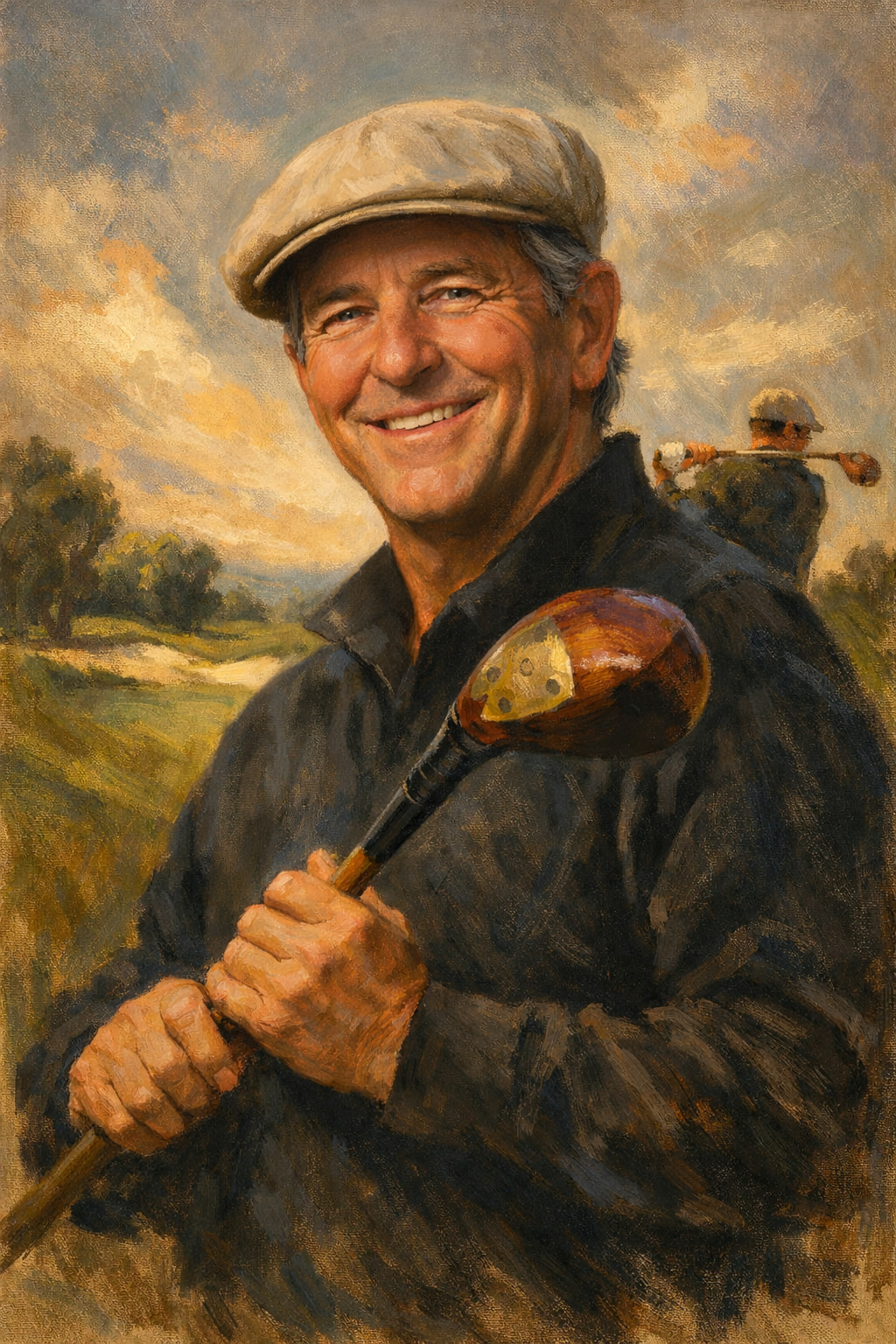
This is me with my flat persimmon driver. Looks like it could be a persimmon style wedge. Odd

1 Like

Speaking of Nelson, a little nugget when trying to put more fuel into the rocket is to stand closer.

Byron said “because if you swing harder, you’re inclined to push more with your feet and legs and raise up a little bit. If you didn’t move closer at address, you’d hit the ball too thin.”

1 Like

Im a witness to that phenomenon in real time.

1 Like