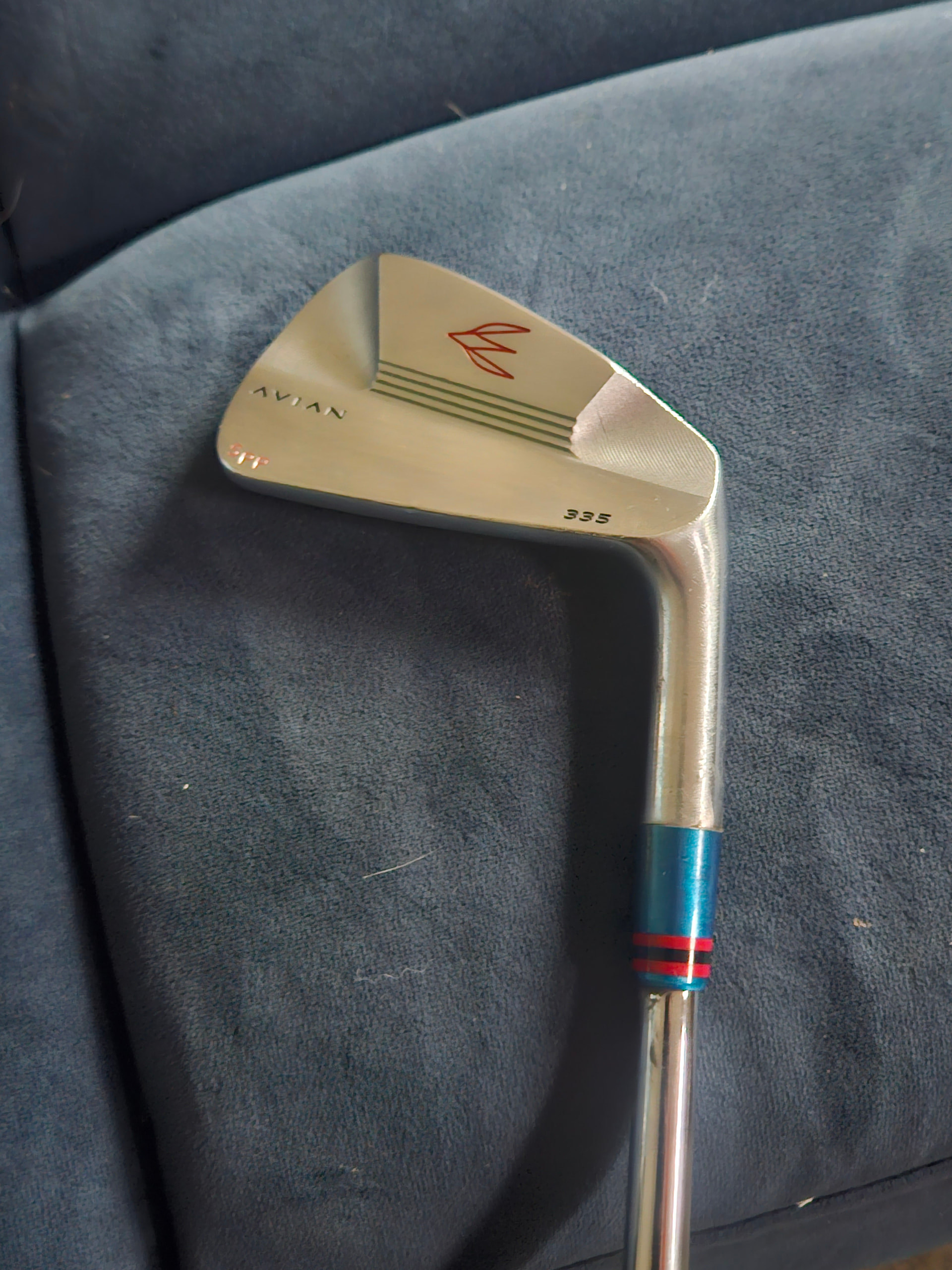
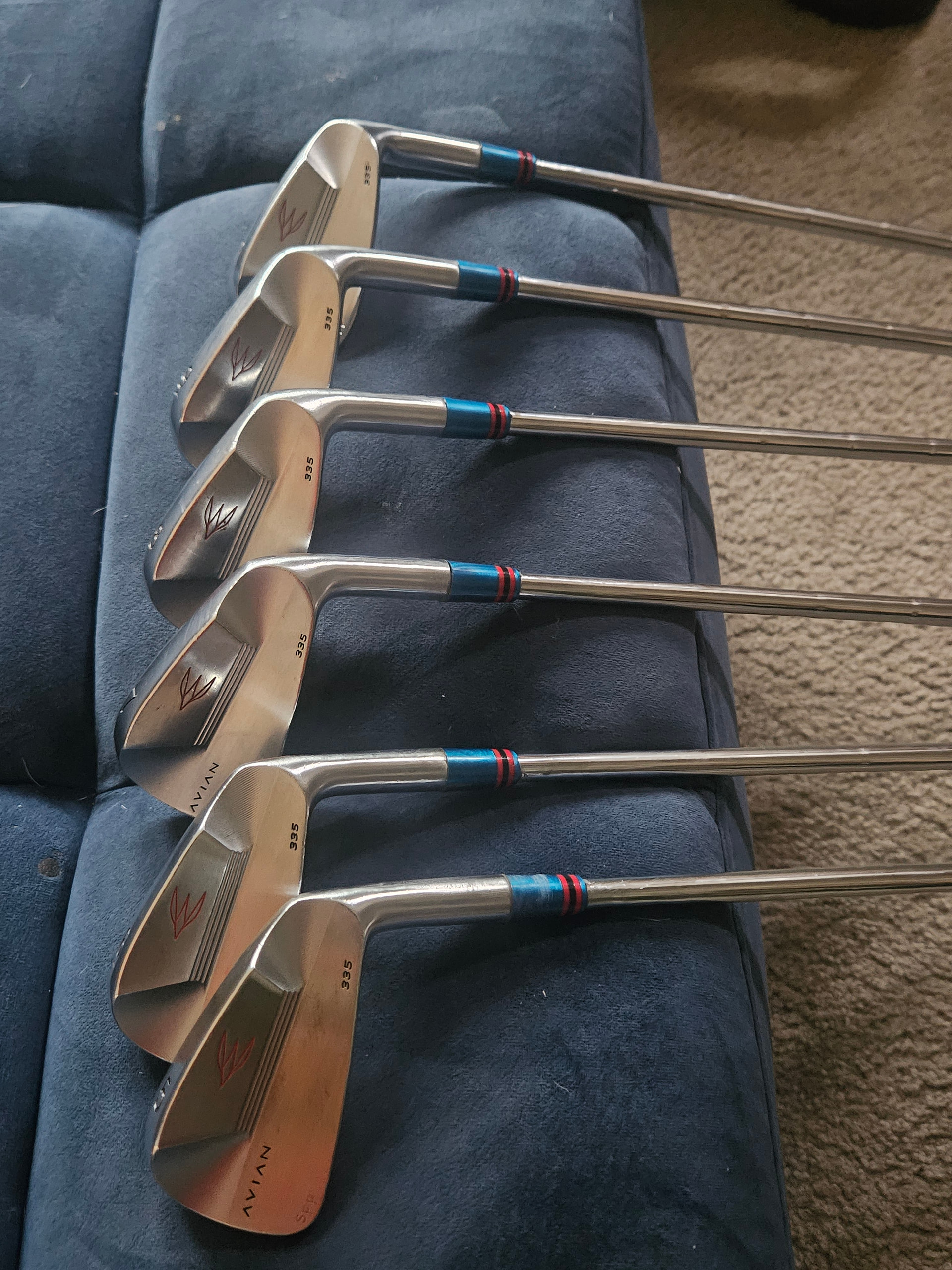
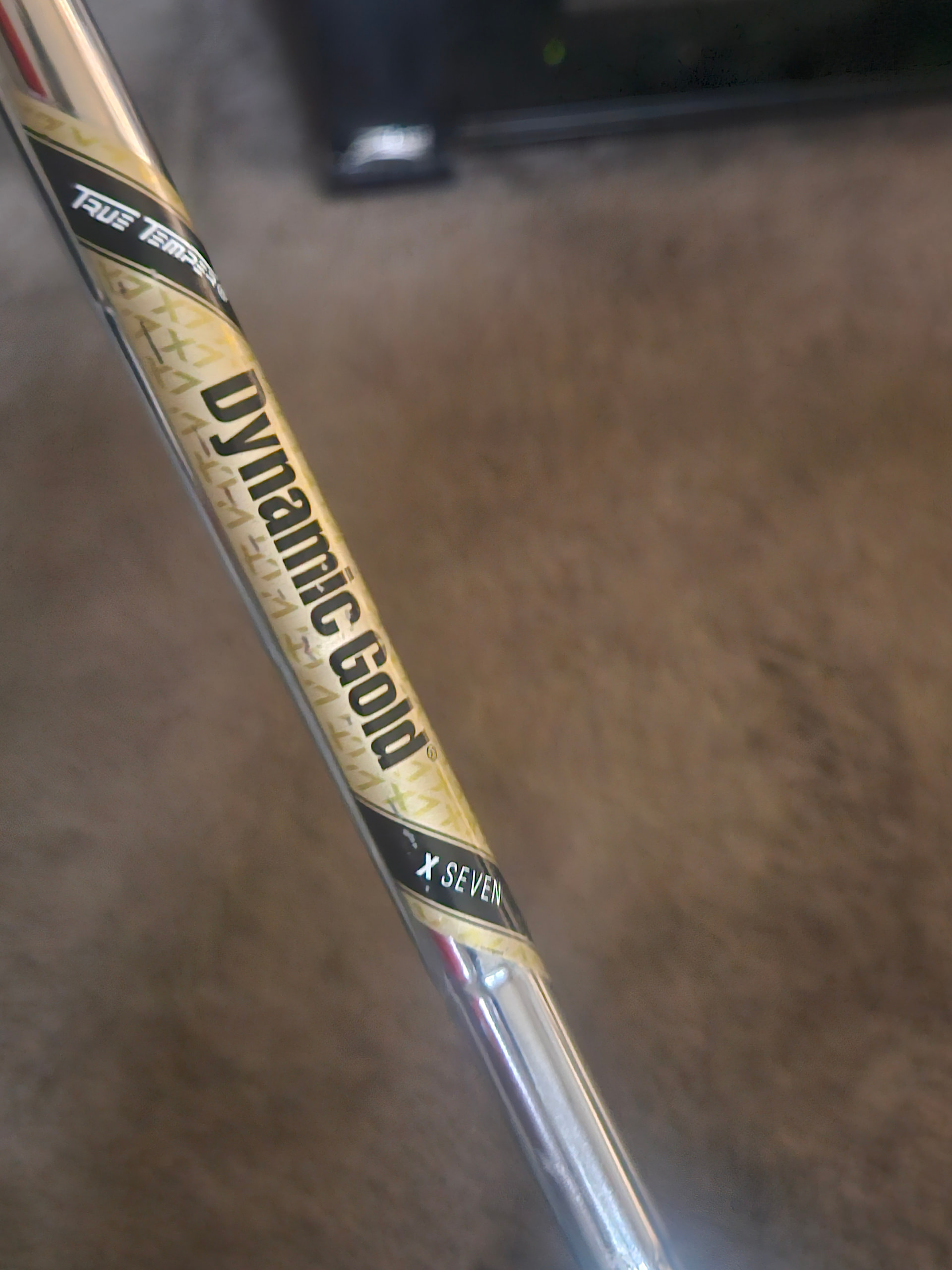
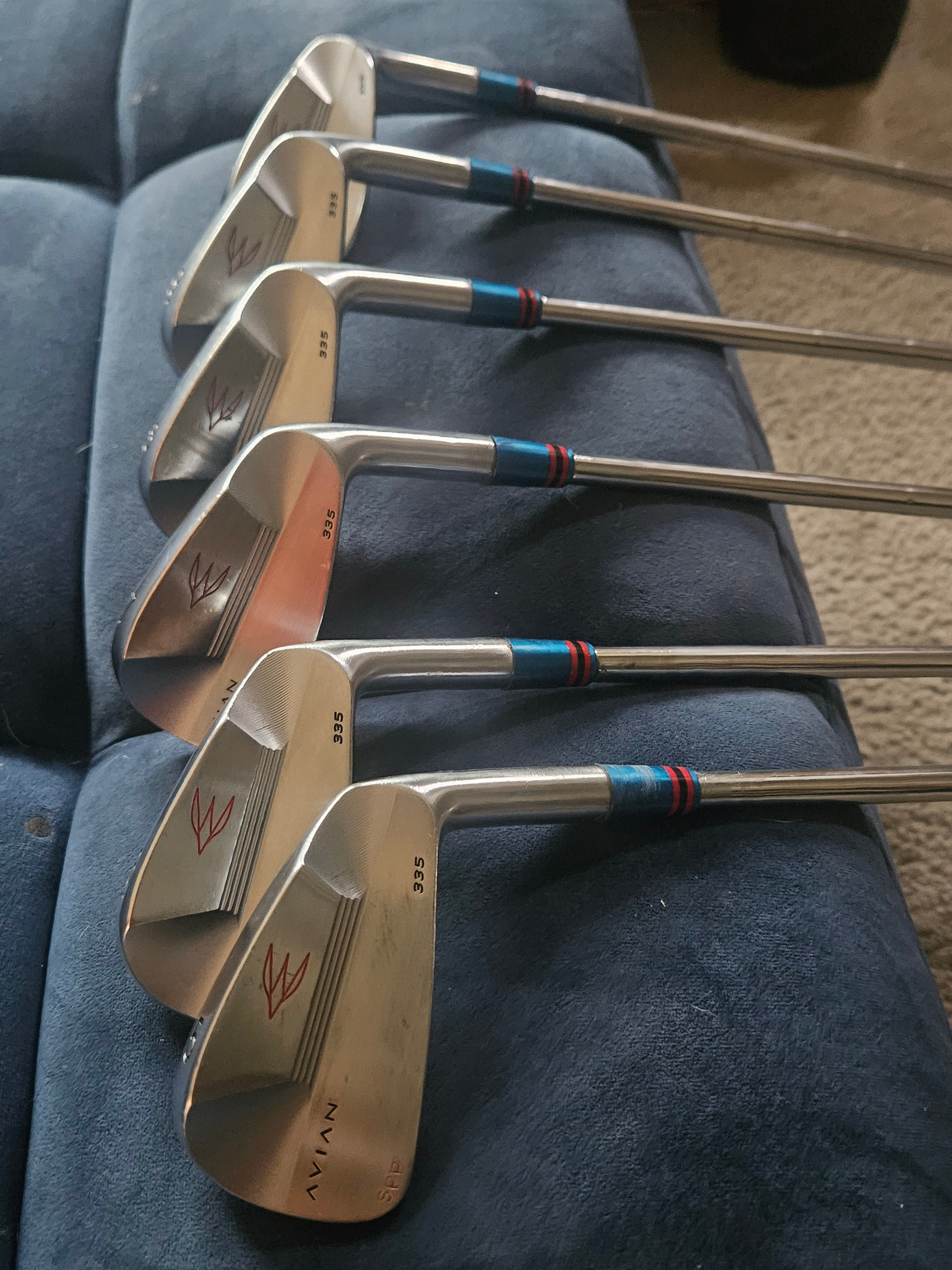
Another successful build Avian Redbird 335s with Dynamic Gold x7 shafts. Talking about a big hammer these will get the job done.
All of them came in from 15.6 to 16.4 ounces with a final swing weight of D5-D7. I will tackle the 3 & 4 iron in the AM.
I was extremely pleased with this build because it came together really well.
Side note: The True Temper X7s come in at 135 grams with the firmest tip of any iron made with the tip ratio of 982 compared to X100s that come in at 920. The X7s are not for the faint of heart they are a true pole shaft by design.
Golf shaft Tip CPM (Cycles Per Minute) measures the stiffness and frequency of the shaft’s tip section, indicating how many times it oscillates when flexed, it is a measurement of how stiff a shaft truly is versus what it is being called by the factory.
X100s come in at 920-930
Apex 5 come in at 917-924
Propel 1 come in at 900-910
KBS 130s come in at 930
Most builders only check the butt end stiffness but the tip cpm is where the rubber meets the road. It will not only determine lift and twisting on impact but it also has a lot to do with feel.
Is that an extrapolated figure? If a cycle is defined, and I’m not sure it is, as one up and one down motion after flexing, or bending, the shaft then a shaft with 930 cycles per minute would have the shaft making a discrete up and down motion 15.5 times within a second- that seems almost impossible. Is that how it works?
if you hold a club vertically with the grip side down like 2 or 3 inches off the ground, then drop it so it bounces on the butt end of the grip and then catch it by the head, the shaft will vibrate like a string and produce a pitch that rings out. Multiple pitches actually, since you get overtones. I always assumed the lowest pitch I could hear was the fundamental but maybe that’s the first overtone in the series an octave up, idk.
I guess once you attach the head the physics will change pretty dramatically. I imagine however they measure this CPM number is from a raw shaft with no head and no grip.
I just watched a few YouTube videos on it. You basically clamp down the grip end, put a weight on the tip and then pluck it like a bass string. There’s a piece of equipment above the tip that measures how fast it oscillates back and forth.
This is not what happens to the shaft in a golf swing of course, as John has pointed out many times, but it does make sense as just another way of measuring stiffness. Faster the oscillation, the stiffer the shaft. I think we all intuitively understand that. It’s really a function of the distance the tip travels. A softer shaft will travel a longer distance away from the center in both directions, so of course it’ll take a longer time to do so.
It’s just a different “ruler” to use for the measurement. A little more specific than R, S or X.
John’s method of using a deflection board with a heavy weight on the end also works. It’s a static representation of the same thing. And closer to what actually happens when you’re hitting a ball.
Maybe I’m dumb and it’s more complicated than that, but I really don’t think that’s the case. Soft shafts bend more, stiff shafts bend less. Pretty straightforward.
Please don’t occupy your time with it, I’ll do a little more digging but it’s not a big issue with me just curious about the process. Hadn’t thought about the process measuring Hz as Newman suggested, that makes more sense, like a tuning fork perhaps.
Having my shafts set up with the same deflection rate has been critical. The shaft doesn’t oscillate prior to impact… it would after impact, but I want the same curve in the shaft from club to club coming down into impact. When I was playing all the time I could memorize my clubs, but don’t want to be doing that anymore. I had a pro come to me years ago boasting about these $3K shafts he bought that had the latest high tech frequency matching done. I put them on my deflection board and they were all over the place. That set would have been a disaster to me. Getting the same deflection from wedge to driver is what hitters should do. I love having a driver that is as stiff as an 8 iron or wedge for that matter. This way I can go at it as hard as I want and the shaft doesn’t do anything unusual.
How do you all feel about the spines on a golf shaft? For those of you not familiar if you put a shaft inside a bearing and hang a weight off the tip you’ll feel a definite hard and soft side. Sometimes the hard side is much stronger and the bearing spins away pretty violently. I usually address this by marking the spine and orient it at 12 o clock addressing the golf ball. This puts the most consistent bend in line with face of club. Curious if the community here has any opinions on the matter.
I use to spine align but I don’t worry about it anymore, after talking to some master fitters and getting their opinion it was really split down the middle some still did it others stopped doing it a few years back. The ones that stopped doing it cited that shaft quality is much better now and tolerances are really tight. But they did also cite that there were only a few companies making better players shafts and when they dealt with companies other than these 4-5 companies they might have to spine aligh.
The companies that were cited as making better player shafts in steel were
True Temper & Project X
KBS
Oban
Nippon but only 4 models in particular
FST if you are lucky enough to find the original rifle shafts
First, we had Spalding’s ‘bird on the ball’, now we have Avian’s ‘bird on the steps’. The presentation looks like someone at one time studied Mayan architecture and line art and it’s leaking into their product. Too many donuts this morning…
I just received my set of Foreward irons. They are 2 flat. Extra stiff shaft. D7 swing weight . Low bounce and with all the mass right behind the impact spot. I will post some pics in the next few days. They are a great company and have based a significant amount of their research and ideals on the conversations John and I have had over the years about equipment. Their motto is to test everything-to find out what you really need. The low bounce seemed to be an absolute game changer for me in the testing process- looking forward to getting them into play when the weather improves.
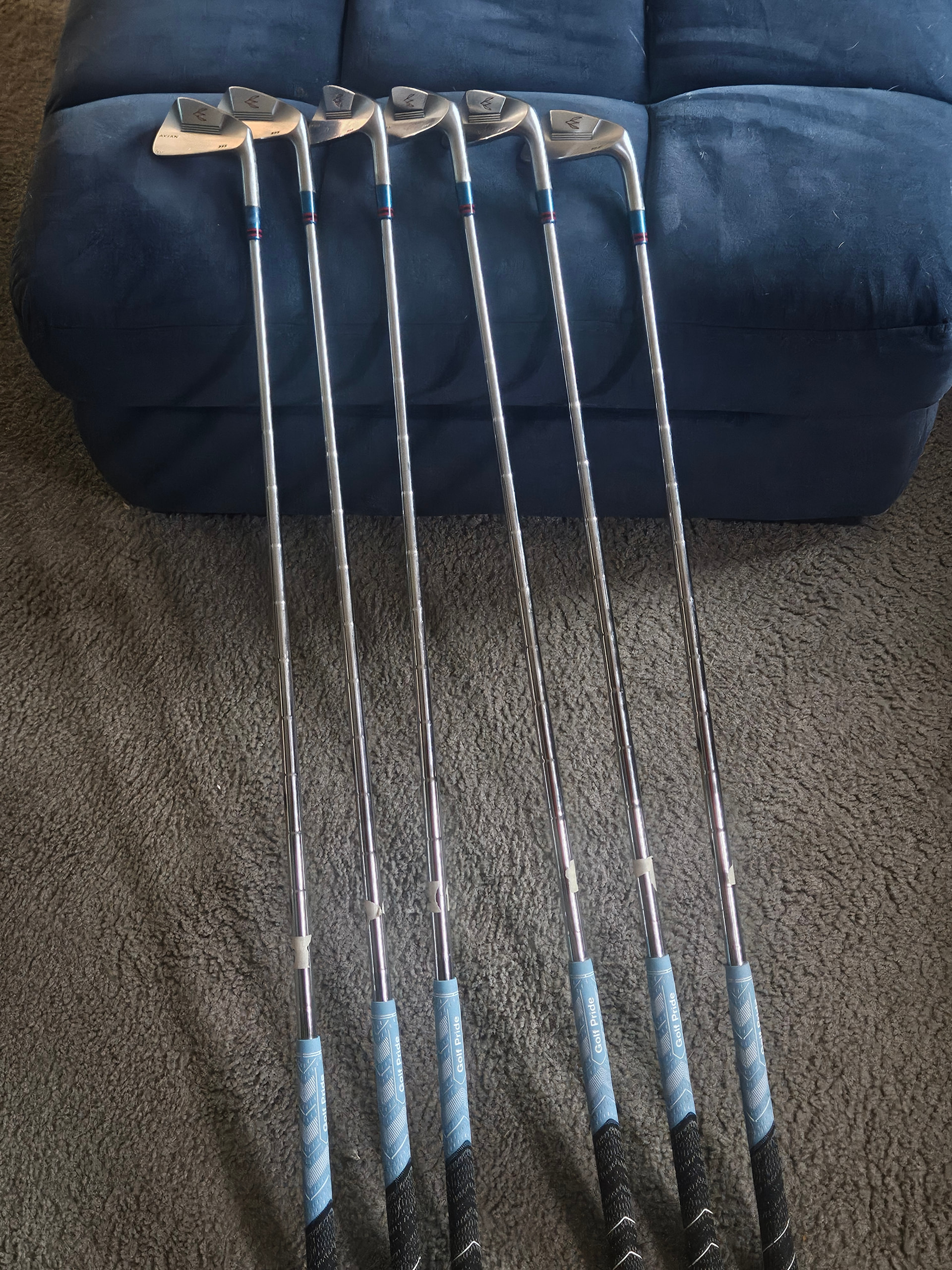


 it actually does have an Asian background.