hey GoLow…how about enlightening us with your background.
You aren’t a student of Advanced Ball Striking so no-one knows if you are Jack Nicklaus or Jack Spratt… for someone so keen on their own understandings of the swing ( and not that welcoming to looking at other people’s thoughts or ideas), it would be nice to know such a thing so we can know what we are dealing with here and continue the discussion.
A good discussion is eye opening for many but it’s gotta work in both directions. I have frustratingly asked numerous questions that have not been answered, so I really want to give up on this thread from my end but thought I would try once more to gain some insight
we throughout this thread have given you many great thoughts (and opportunities) to really dig deep and provide some insight but the blinkers seem to be on and all we have seen is rebuttals and avoidance of answering the questions posed…
it has been very like I have called an 800 number to fix my computer and the guy on the other end is reading the remedies from a note book in an attempt to tell me what to do at my end with no forward thinking
this isn’t a rude question, just a logical one …I am sure many others on the site are thinking exactly the same thing.
i am not scared to ask…because if I am going to listen to someone about golf and hopefully/possibly/maybe learn something I may not know yet, I really want to know the source.
I certainly wouldn’t expect anyone to let me do their taxes or let me give them open heart surgery even though I may have read a few books about it or seen such a thing on the Discovery Channel…so why should we listen to what you say about the golf swing throughout these past pages?..
Own playing experience in events?..golf teaching?..tour player?..good golfer?.. bad golfer?..single figures?..double figures?..scientist?..club champ?..golf equipment industry?..
Golf Machinist enthusiast?.. range ball pounder?.. golf lover?..golf watcher?..
The reason I promote holding shaft flex is that I don’t have to deal with trying to “Time” the shaft straightening exactly at impact. I try to pin it back “flexed” to take timing out of the swing. This also enables me to not have to worry about perfect shaft frequencies and all that stuff swingers need to. Spining shafts, all that stuff.
The second reason is that holding shaft flex puts more pressure in my hands than a dumped shaft. Since golf is ultimately a game of feel, this pressure in the hands from leveraging hand speed against the mass of the clubhead which creates the pre stressed clubshaft is truly the lifeblood of shot shaping. I like to be able to feel the club, and feel pressure in my hands.
Third, the physics of impact. Homer Kelley was basically correct in his epic chapter 2 of TGM regarding mass and ball compression, the dynamics of a pre stressed clubshaft, and the basic physics of hitting a golf ball. I don’t agree with much about how he suggests you do this, but he understood what needs to happen regarding the physics of mass and acceleration as far as the golf ball and club are concerned.
As far a why today’s touring pros prefer more upright lie angles? I would guess like most golfers, people get swooned into the idea of “standard”. It sounds safe. They don’t think it through and neither do their coaches…and they never try flatter lie angles. I grew up playing standard lie angles. For most people, they are going to play what is handed to them… and then their swing will evolve from that gear setup. However, standard lies are simply not ideal unless you are about 6-8.
Today I played with a nice Asian gentleman and his son along with my Dad in Sedona, at Oak Creek CC. A nice Robert T Jones Sr layout. After he watched me finish birdie, birdie, par, Eagle, par, birdie for a “15 green” 69… he started asking questions. He stood 5-4 and was playing irons 2 degrees upright. After the round I had him hit my flat blade 5 iron, and he looked at it and said… “Oh I can’t hit this”. But he did. I dropped two balls in the fairway, and he remarked how heavy the iron was. I told him to grip it firmer, and really strike it hard. He absolutely flushed both shots, unlike anything he had hit all day. So guess who is switching to a set of vintage blades next week? It’s not about height or arm length, it’s about how much knee bend you can handle through impact. Watch Knudson.
I would say I really felt off today… which is ok. Golf is a tough game, and some days the club just feels terrible in my hands… but I was still able to play a nice round because I chipped in twice, rolled in two 15 footers, and a 20 footer.
But because I use heavy gear, and flat lies, I don’t have to worry about left too often, and I can certainly feel the clubhead in my hands much better than if I was using light gear. Truthfully, I kinda skanked it around. I was not pin hunting today,
and had a lot of 40 foot putts. However, by keeping the cards stacked in my favor with heavy clubs and flat lie angles, my OTT swings today were still on the green, not in the bunker. My thinned irons had enough mass in the heads to get me on the green… and my missed greens were short and right with simple uphill conversion opportunities. The swings where I jumped at it from the top, and over accelerated, well, I have stiff enough shafts that the clubhead couldn’t do anything silly or get too out of position.
So really, this is exactly why I have my gear set up flat heavy and stiff. So I can not play for 3 weeks, drive 1000 miles, not hit balls, and keep the ball basically ahead of me, not going sideways.
Guys on tour who play everyday, hit 300 balls, chip and putt, and grind, grind, grind. well… given that… I think we should be seeing something a lot better that what we are. Maybe you are impressed? Not me.
I think we should be seeing nearly every guy on tour doing this most every round. With all the so called technological advances, video, high speed cameras, trackman, TGM, wind tunnels, frying pans, cavity backs, laser scopes, perfect fairways. We should be seeing guys hitting pins with regularity. 16 greens a round should be standard fair, and 18 green rounds once or twice a week from guys even around the cut line. With the money people are paying these guys, we should be seeing something a lot better. Unlike you, I am very disappointed.
So what is the problem? Basically the golf swings are terrible (at that level), the equipment is totally missing the mark, the balls are low spinning and too difficult to control, the players are too spoiled with perfect conditions. They don’t know how to hit out of a bad lie. They cry about the wind. They cry if it rains. They cry if there are trees on the course or the rough is too high. They rely too much on yardages, and haven’t learned to feel their shots correctly in advance of the strike.
Most people don’t play all that often… and they don’t have time to grind 1000’s of balls. If anyone needs flat, heavy, stiff gear it’s your basic amateur player. I could probably miss every single green and still shoot 76. By not hitting space balls, and playing smart… missing greens in the right places and a decent short game. Most anyone can be playing in the high 70’s
or better. You simply don’t need to be smashing the golf ball 300 yards with a frying pan. Get a flat heavy stick, work it around your body, eliminate the left side, grip it firm and just make decent contact, and you can play pretty respectable golf.
12 piece posted this video on another thread earlier today…Hogan & Trevino at address and impact compared to today’s players at address and impact
Do players raise their hands because of the upright equipment ?..or because of coaching?.. or a combination of both
Hogan and Trevino were two of the absolute PREMIER ball strikers ever…
not by co-incidence they come closest to their address shaft position with their impact shaft position…and the hands/shaft actually gets lower than address…never higher …is this something to do with flat lie angles or just luck?..it wasn’t tuition because they didn’t receive tuition from anyone
We know Hogan’s clubs were very flat (at least 6 flat) and we know (thanks to Robbo asking trevino himself) that Lee used 3 flat…so why does everyone use upright gear today?..is upright actually better just because players use it?.. … do they really know any better?
if our goal is to minimize club face movement wouldn’t it be best to get the clubface/arms/hands back to a similar point that we started at just like Hogan & Trevino did… and it seems to be easier with flatter gear in our possession and if it has mass behind it also…even better
I prefer not to disclose my identity. My background and experience should really not be important to our discussions. As I’ve said before, we’re just having a discussion. It’s nothing more, and nothing less.
I have tried to respond to your messages in a detailed and thorough way, attempting to cover the most important parts of the many sub-topics we’ve been discussing. I think the exchange of views have been working both directions. Since the ABS teaching method is something you and Lag teach I feel you both should be willing and able to answer a simple question about it. I don’t see why knowing my background or experience should make any difference or alter your beliefs or your answers.
I hope you do not feel that my questions are interfering with your students…or the relationship you have with them. I would think that they should find the topic we’ve been discussing most interesting…because it is one of the keys to your method and training. The discussions have been almost entirely pertaining to sub-topics about the swing method you teach and endorse, mainly concerning only two points - (1) holding the shaft lag beyond impact with a golf ball…and (2) having continued acceleration of the clubhead after impact with a golf ball. I can’t get a clear answer from either you or Lag on whether the two of you believe these two things can actually be done. My understanding is that they cannot be done. I’ve gotten mixed signals and varying answers from the two of you. I would think that for the benefit of your ABS students that you and Lag could answer the question with a simple Yes or No. If these two points are only “intentions” and you do not believe they can actually be done, then just say so. I am just looking for clarity on these two points.
I understand from Lag that some supposed experts have discussed this topic back in 2008. What was the outcome? Have any scientists, physicists, kinesiology experts, bio-mechanics experts and bio-dynamics experts had a problem with claims of accomplishing #1 & #2 above?
for old time sake for one last time and then someone else can take over if they feel the need to continue this stuff which is in The Lets Talk lag Golf Machine thread.
having read all these posts…where do you now stand on equipment?..
do you still believe today’s equipment is superior in it’s setup for a good golf swing? …
do you think tuition is well founded given that very few coaches were good players and would know/feel these insights?..they must not know about them as they don’t teach it…is that the coaches fault or equipment’s fault…the chicken or the egg?
do equipment companies really have much clue or true concern about what is best for the golfer and his swing?.. or do they just sell you something to stick a band aid on for a few weeks/months safe in the knowledge you will be back with a fistfull of $$$ very soon to buy the latest greatest ‘game saver’…
have the scales of your thoughts tilted in any direction?
GoLow
What will be the imprtant impliation/outcome of that answer. Do you believe that some harm is being done by claim #1 and #2 ???
In general these forums have avoided “circular arguments”. On the LTLGM thread you posted to understand (?meaning agree) with the logic of flat lies. But after a weak you come back and say NO. On the video of Lag that I posted, you initially said the shaft is reacting to the ball; then on Lag’s expalnation that it was a whiffle ball, you instead of saying that this can be done with at least a whiffle ball, you started a new train of question in that why would he not want to transfer energy into the ball. And now we are back to the #1 and #2. At this rate we are just having a discussion with no aim. Well frankly I am not intrested in discusssion for Just that.
As a simple answer of why we dont want to transfer the shafts energy to the ball by releasing it? so we can use it as a conduit to transfer the energy from the powerful drive shaft of the rotating torso. The moment it looses flex, that transfer is interrupted.
And this is how the shafts reacts to the ball when you dont hold flex to and beyond the ball.
Regarding acceleration of the clubhead post impact…
One thing I know for certain is that I would be able to re accelerate the clubhead after impact in the event of deceleration.
An absolute YES on this one.
Mandrin would be the guy to put forth a formula for exactly how much force, weight, initial velocity and acceleration which would be required to render the golf ball completely incidental.
However, if I strike a golf ball, I certainly have the ability to re accelerate the clubhead post impact. Any of my module #7 students could attest to this because every single one of them is able to do this.
As far as can I do this? or has it ever been done with a golf ball by anyone? You certainly would need pre and post impact velocities for the same swing, using radar or microwave technology.
I agree, it would be helpful for us to know a bit about your involvement with golf. You certainly don’t need to give yourself away. If you are just an arm chair theorist, then it might be helpful to get one of our scientific guys on here to discuss.
If you are a club pro, that doesn’t tell anyone who you are or even a tour player. One of our most prolific posters here I recently found out is a very accomplished tour player, yet remains anonymous because he simply asked that I keep him that way here. Fine. I know you stated that it is irrelevant… but I would disagree… because you can’t know what you don’t know.
There was a well know TGM GED (authorized instructor) who could not understand some of ideals I was putting forth. He flew across an ocean to visit me, and we played golf and I would not think that he broke 90. It was shocking to say the least, but OF COURSE he could not understand things… and to think he is trying to teach low handicappers. You cannot understand the golf swing completely unless you can actually experience it within the body yourself. There are all kinds of internal pressures going on, biomechanical actions that simply CANNOT be seen with the naked eye. Not even with a high speed camera. Mike Maves suggests curling or raising your toes for different types of golf shots. How are you going to see that? and how much pressure are you applying?
Would you know if someone had a lift in their left shoe even at 40K shutter speed?
If you are a TGM instructor, I could help you by suggesting certain “scriptures” from the yellow book to read before you go to bed and ponder through the night.
It could be very very relevant know a bit about your background… just in a general sense.
Yep…stiff shafts rock! Started using Apex 4’s a few weeks ago. Now this time last year anyone saying a tiny rat could handle an Apex 4, I would have said you’re nuts…of course last year was last year.
I actually like them a lot…and yes it did surprise me a little. Not sure why…but going from Apex 3 to Apex 4 caused me to increase the grip size a little. The 4’s have a standard Hogan cord grip which just felt too small for the job that would now be expected of a rat. Switched a few grips out to near midsize to see what would happen…excellent…the hands loved it.
GoLow mentioned before about handicappers throwing the clubhead past the shaft in its journey to the ball. I don’t know if he appreciates just how much the upright gear with offset promotes that in and of itself.
And it’s funny in that Hogan gave us a great message about reversing our natural instincts, yet some who tie their horse to that phrase often fail to see it’s true application and meaning. RR
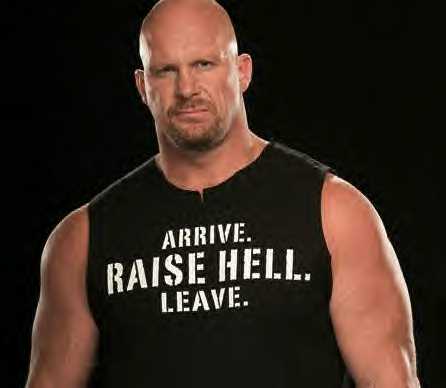
You mean you didn’t mean “Stone Cold”?! Words to live by from the great man… this is going to my new swing thought when I arrive at the course… but you gotta have the face to go with it!
Where do I now stand on equipment? Do I still believe today’s equipment is superior in it’s setup for a good golf swing? Do equipment companies really have much clue or true concern about what is best for the golfer and his swing? Those are some broad questions!
For the most part a club manufacturers’ primary goal is to produce the highest net profits they can. To do that they must sell more product. To sell more product they must advertise, promote and hype their products, as well as hopefully have users of their clubs give favorable word-of-mouth reviews. That said, probably some of the strongest impressions that influence amateurs to purchase a manufacturer’s clubs come from favorable results - results the prospective [amateur] buyers see from professional tour players and their golfing partners. Nothing new there!
Over the years clubs have changed drastically with new materials, shafts, designs, lengths, lofts, lie angles, offsets, etc. Was the reason for the change necessarily about making a better club? I feel the answer is both yes and no, but mainly it was a means to increase revenue and profits using these new “features”. It’s no different with automobiles, televisions, computers, etc. What used to be the latest in good golf clubs (or whatever) becomes just another old model that is not as good as the latest model (or so one thinks). Most everyone thinks the newest model (of whatever) is better than the previous model. In most cases that’s true. This mind-thought promotes sales of the newest clubs (or whatever). During this time of major change the club manufacturers (I believe greatly led by Ping with their cavity-back and heavily offset irons) started making game improvement clubs (cavity-back, offset, lower COG, longer shafts, hybrids, etc.) mainly for the masses…the mid to high handicap golfer, which is the class of buyer where 99% of their sales and profits ultimately come from. If a clubmaker did not offer these “improvement” clubs they lost market share to their competitors and didn’t please their shareholders. Did these game improvement clubs help mid and high handicap golfers? Actually yes, they did. The hackers quickly found that they could get the ball airborne, mishits were more forgiving, lighter shafts helped golfers muscle the club easier, longer shafts gave more distance, hook clubfaces sliced less…and the list goes on and on. Sales of these game improvement clubs were a winner. Hackers enjoyed the game more. More poeple started playing golf. New courses were built everywhere throughout the world. The golf industry was never better.
But, how about the really serious golfer that somehow, some way, already had a good golf swing - the golfer that didn’t need these game improvement features in clubs because he or she already had an efficient and effective golf swing? How about the young golfer with a good swing that has a desire to play at a much higher level, maybe even professionally? What about the professional tour player? This elite group, while only representing just a tiny percentage of overall sales, couldn’t be forgotten. So the clubmakers kept a “players club” or “tour” model club in their lineup. They needed the endorsement of the tour pros to advertise the brand, not necessarily the exact same club model the tour players actually played. So now both classes of golfers (hackers and experts) were covered with clubs that are best suited for them. So what’s the problem?
The problem is really not a problem at all in my opinion. The old school thinkers think the game improvement clubs have changed the game for the worse. Yes, it has. But, not everyone agrees. The older golfers are naturally more inclined to think the game has been damaged with longer and more manicured courses, golf balls that can’t be “worked” as easily, etc. The younger golfers are naturally more inclined not to see things in the same way. Old school versus new school. The old school thinkers don’t like the new game improvement clubs because they think better golf swings were best learned with harder to hit clubs - smaller sweet spot blades, no offsets, heavier clubs, stiffer shafts, shorter shafts, higher lofts, flatter lies, steel shafts in all clubs, smaller heads, persimmon woods, forward and higher placed COG, roll and bulge in woods, etc. The younger golfers don’t necessarily agree with this old school opinion. The younger golfers have [now] grown up using graphite shafts, larger clubheads, lighter clubs, metal woods, longer shafts, stronger lofts, more upright lies, cavity-back irons, golf balls that curve less, etc. Along the way these young lions have adapted very well to the game “improvement” and/or game “enhancement” golf clubs. These young expert golfers and tour players learned their extraordinarily good golf swings with different clubs than what was available 30-40 years ago…just like the golfers of the 1960s and 1970s learned their extraordinary good golf swings with different clubs than what was available 30 or 130 years ago. The only difference is that there have been more changes over the last 30-40 years than in the preceding 100 years. I don’t doubt for a second there won’t be much greater changes in clubs, balls and courses in the future. Something tells me that all golfers will adapt…with only a few holdouts that strongly protect. There will likely still be a relatively small number of expert golfers and a lot of hackers.
We all know that a good golf swing is all about impact with the golf ball. Nothing else really matters. No two people have the same looking golf swing. Some people are taller or shorter, have longer or shorter arms or legs, some are double jointed, some have more flexibility, etc., etc. There’s more than one way to skin a cat, and there’s more than one way to swing a golf club efficiently and effectively. The best golfers throughout time (in my opinion) learned to strike a golf ball based on trial and error, but more importantly they learned based on what worked best for them as a unique individual…not necessarily by what someone suggested they do. What works for one person doesn’t necessarily, and quiet often doesn’t, work for someone else. Good golfers find a way to have excellent impact with the golf ball to control direction, trajectory and distance. How they do it varies as much as our fingerprints. Their backswings, downswings and follow-throughs are as different as our DNA. This is why, in my opinion, the style or kind of golf club (old blades and persimmon versus the most game improvement clubs) is not all that important to learning an efficient and effective golf swing. That’s why you see a wide range of equipment being played by the tour pros (offsets, shafts flexes, shaft material, blades, cavity-backs, lies, lofts, lengths, clubhead material, etc.) Good golfers adapt and fine-tune their individual golf swings and equipment to what works best based on results, what the individual likes to feel, and what the individual likes in the looks. Seldom does equipment play a significant part in a golfer’s ability or inability to learn the golf swing…or to advance.
Do I think tuition is well founded given that very few coaches were good players and would know/feel these insights?
Teaching for the most part is a poor and borderline a farce. Seldom do teachers even allow a beginner to start off with their own natural swing. It becomes [swing] position over feel right from the get-go. Most often than not the teacher will instruct the student to swing as they themselves swing a golf club, which is at polar opposites from the way I think a student should be taught. The best teachers in my opinion are the ones that accept that there are many ways to swing a golf club effectively to achieve excellent impact conditions…and they understand the many intricacies of those ways (plural) to swing. They need to be able to communicate (two-way) with the students so the teacher can learn what the student is feeling and experiencing. They need to be able to describe things and feels in numerous ways, using everyday real-life events and forces, so the student “gets it”. I think it’s extremely important (almost imperative) for the teacher and student to be physically with each other (in-person) for a real-time hands-on, quick exchange of verbal communication, and 3-D visual of the student as he/she swings and the resulting ball flight.
I dare say that most teachers really do not understand much about the golf swing, the same as it was decades ago. Not much has changed except for drawing a bunch of lines and angles on images from high-speed cameras. Beyond seeing good results I believe teaching or acquiring a good golf swing is about feel. I think the better teachers show and then describe, using a number of different examples until the student relates. Beyond the student actually carrying-out the physical activity (kinesthetic learning) of performing a golf swing; some people are visual learners, some are auditory learner, and some are reading/writer-preference learners. When student and teacher are together the teacher should have the ability to determine whether the student favors being a visual learner or an auditory learner. Reading/writer I usually not the most favored or best way to learn a physical activity.
Lines drawn on images and video only go so far in teaching a student a good golf swing. Even Jim Furyk says he “thinks” his swing “feels” like it “looks” similar to his fellow pros’ swings. Far more damaging (in my opinion) to golfers learning the golf swing and/or advancing to a higher level is for a golfer to try to copy someone’s swing or swing method without regard to first acquiring their own personal golf swing first…and then experimenting with different things to improve their own unique golf swing. How many times does the hacker hear or read conflicting instruction on the Golf Channel, magazines, books, television announcers/swing analysis experts, playing partners, etc.? The reason it conflicts (in most cases) is not because one teacher is wrong and the other is correct - it’s because everybody is different and there are many ways (physically and innately/naturally/inherently/instinctively) each of us use our bodies in different ways to achieve a good outcome.
I believe a good player doesn’t necessarily make a good teacher…and a good teacher is (or was) almost always a good player. How good? I would say a teacher should play (or have played) to a low single-digit handicap or better.
Have the scales of my thoughts tilted in any direction?
No, they have not…
That will mean that the “Bad” power sources i.e straightening of the right arm and straightening of the legs (raising) were kept in check in the impact zone. So the club swung on a true plane.
GoLow
I am reposting this because as you said it does’nt matter who the poster is. So you cant just selectively answer Lag and TM and ignore every other post. I think Centripedal has a pending question for you too.
 RR
RR

 Go easy on those retro-hippies Lag, they mean well.
  RR
RR